
Back
Oobit
June 9, 2026
•
5
min read
.png)
Table of contents
Why Payments Have Become a Bottleneck for Autonomy
An honest assessment of the current stage
✓
The agent economy exhibits a curious asymmetry. Machines have already learned to pay each other: by the end of April 2026, the x402 protocol had 70k+ active agents and 184M transactions. But this is machine-to-machine - sub-cent payments for APIs and compute, a category where the card interchange economy is breaking down and stablecoins are winning out
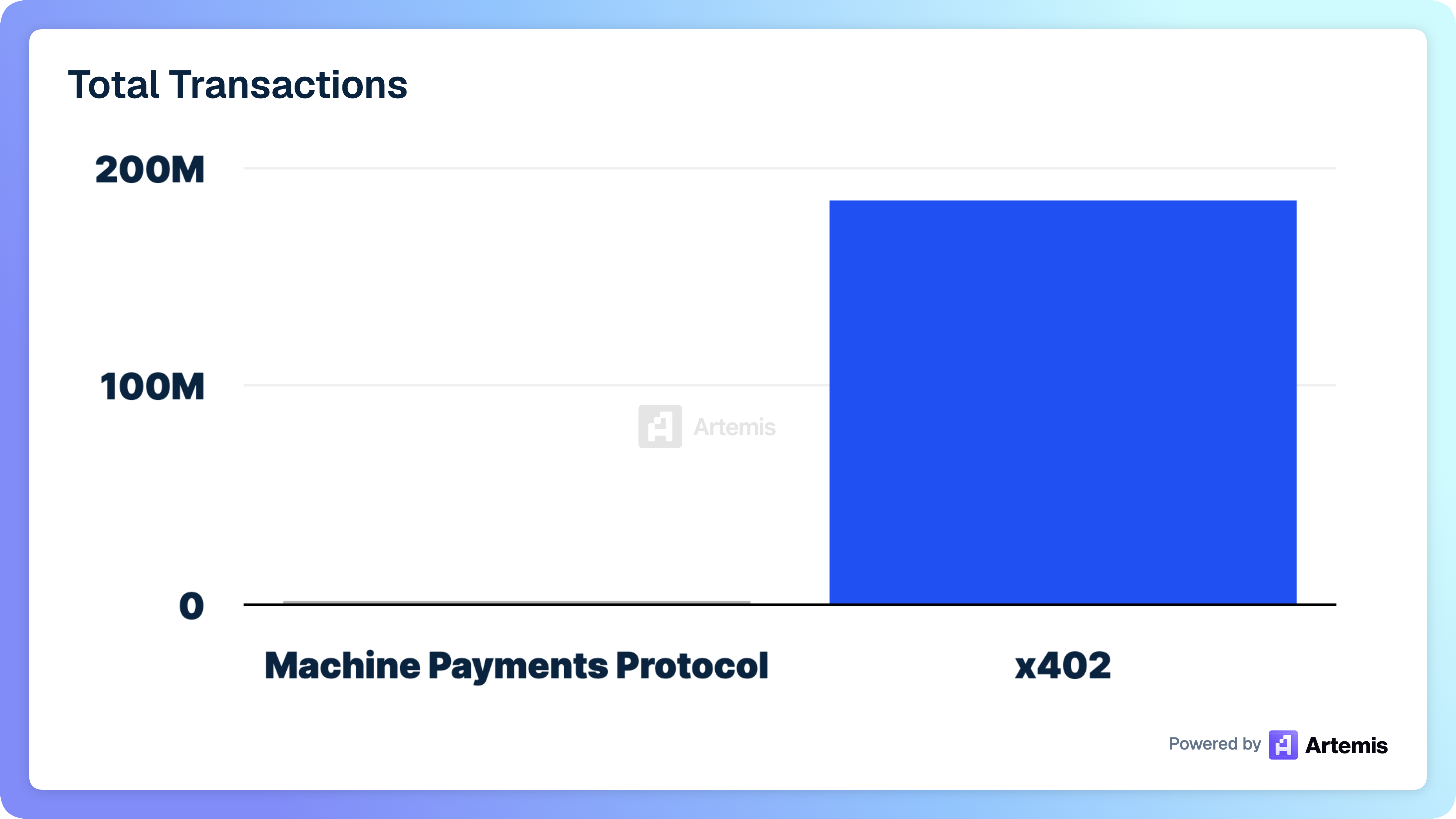
The problem lies elsewhere. When an agent needs to complete a real business task, such as paying for a subscription, purchasing cloud services, or processing a vendor payout - the obstacle isn’t the protocol, but their authority. And that’s exactly the problem we’re solving.
AI agents are already managing operational processes - cloud procurement, SaaS management, ad buying, and marketing automation are increasingly being handed over entirely to autonomous systems.
But according to a recent McKinsey research (State of AI Trust, 2026), the main barrier to fully scaling agents is not technical limitations, but control: nearly two-thirds of organizations cite security and risks as the main obstacle to fully scaling agentic AI, far ahead of regulatory uncertainty or technical limits—exactly why spend policies and controls become the unlock for safe autonomy at scale.
Security and risk concerns are the most frequently cited obstacle to fully scaling agentic AI.
Main obstacles preventing organizations from reaching fully scaled agentic AI,1 % of respondents
Security and risk concerns
62
Regulatory uncertainty
38
Technical limitations
38
Gaps in responsible AI tooling and control
36
Resource or budget constraints
34
Unclear or insufficient business value
32
Immature vendor or ecosystem landscape
28
Organizational resistance
23
Lack of executive support
9
1"None" (1%) and "Other" (2%) answer shares are not shown. Respondents were asked to choose all that apply.
Source: McKinsey AI Trust Maturity Survey, Dec 2025–Jan 2026 (n = 496)
McKinsey & Company
In other words, what is holding businesses back is not the ability to experiment, but confidence that autonomous systems can be safely deployed at scale.
And then there’s a dead end. When the system needs to be paid, the business has two options: either share full corporate card credentials with the agent, or route every charge through a human approver. Both are costly. Shared credentials mean financial exposure. Manual approvals defeat the very purpose of automation: when you have to bring a person back into the cycle, the whole point of autonomy disappears.

The infrastructure exists. Authority does not. The number of adjusted buyers using x402 has grown to more than 750,000, demonstrating that autonomous agents are already transacting with other machines at scale.Yet when agents need to pay for SaaS subscriptions, cloud services, or vendor expenses on behalf of a business, the challenge shifts from payments infrastructure to governance and control.
As our CEO Amram Adar put it:
“To be honest, the online world isn’t yet ready for AI agents to perform complex tasks and make payments on behalf of a business or an individual.”
The question isn’t whether agents will make payments. The question is how to grant them that authority without handing over the keys to the treasury.
We’ve launched Agent Cards - dedicated virtual Visa cards designed specifically for AI agents. The idea is simple: each agent gets their own card, which keeps identities separate and eliminates the problem of shared credentials.
Three things that make this work:
The cards are funded directly. Each card is funded from the company’s USDT treasury, without conversion to fiat - for businesses whose treasury is already denominated in stablecoins, this eliminates a whole layer of friction. To our knowledge, this is the only agent-card product on the market built specifically for stablecoin treasuries.
Control is built-in, not advisory. Spend policies are configured during setup and enforced on the server side, the agent cannot bypass them. Every transaction, whether approved or rejected, generates a real-time, human-readable log, eliminating manual approval queues. Merchant limits and spend controls operate at the transaction level, following compliance checks.
This is already working with real agents. Support for OpenAI, Claude, AutoGen, and LangChain allows you to automate subscriptions, ad spend, and cloud services. The first use cases include payment processing integration (subscription billing and vendor payouts via Stripe) and automated expense reporting with a structured log for all active agents. You can activate it in 3 minutes using a 5-step wizard.
Why us, and why now
The infrastructure behind this is no experiment. We serve over 175M merchants in 80+ countries. Cards operate on the Visa network - meaning they are accepted wherever Visa is accepted, without any changes on the merchant’s end.
The market is moving fast. Analysts predict that agent-based AI will influence over $1.5T in revenue in US B2C e-commerce by 2030. We intentionally present this figure with a caveat: forecasts for agent-based commerce vary by orders of magnitude, as everyone measures a different scope. But the direction is clear - the AI-agent market is moving from demo to production faster than fintech can adapt.
Most virtual-card APIs assume a human cardholder. Most expense platforms assume a person to whom a charge can be assigned. Neither of these concepts holds up when interacting with software that runs 24/7.
We are not pretending that the problem has been fully resolved. PSD2 SCA still requires explicit human authentication for payment instructions, with no mechanism to grant agents equivalent authority, and the status of AI agents as payment service providers remains undefined in any jurisdiction. That is why we are launching cautiously: cards have been issued to a founding group of businesses, and access is limited while we assess usage and compliance prior to a wider release.
Agent Cards aren’t the end goal - they’re just the first step. As Amram puts it:
“This is the first step toward giving autonomous financial transactions true autonomy without losing control. Over time, as e-commerce matures, agents will operate completely independently. We’re building toward that moment.”
Latest articles
USDC vs USDT: Key Differences and Which One to Use
October 20, 2026
•
5
min read
_2026-10-18_12-04-12.png)
How to Buy Steam Gift Cards With Crypto in 2026
October 17, 2026
•
6
min read
_2026-10-06_13-48-20.png)
GTA 6 for Free? Price, Scams, and How to Get 10% Cashback with OOB
October 6, 2026
•
6
min read
Open your treasury, hold dollars, and start paying the world.
Abre tu tesorería, guarda dólares y empieza a pagarle al mundo.
Abra seu tesouro, guarde dólares e comece a pagar o mundo.
Scan the QR code to download the app
If you're excited by the future of money, we'd love to hear from you.

The People's Money.
Pay with Oobit
Crypto CardAI PaymentsLocal QR PaymentsATM WithdrawalsCrypto Cashback Oobit DePay
Pay with BitcoinPay with OOBPay with USDTPay with EthereumPay with SolanaStablecoin
Send Money
Send Crypto to BankSend Money InternationallySend Money to the USASend Money to BrazilSend Money to ArgentinaSend Money to the UAE
Oobit For Business
Global USDPay International ContractorsCorporate CardStablecoin Expense Management
Company
NewsAboutCareersBlogResearchPrivacy NoticeTerms of UseFAQs
Oobit Technologies 2026. © All rights reserved.
Oobit provides technology that enables users to spend digital assets through existing payment networks. Services are subject to regional availability and regulatory requirements. Oobit operates through multiple entities globally. Certain features may be provided by licensed partners depending on your location.
US Cryptocurrency services are provided in partnership with Bakkt Financial Solutions I, LLC. Bakkt is registered with FinCEN as a Money Services Business (MSB) and holds state money transmitter licenses.