How To
Oobit
5
MIN READ
June 16, 2026
Most guides on using USDT as a payment method assume you need to find a crypto-native merchant, send funds directly to a business wallet, and hope the recipient knows how to handle stablecoins on their end. This one doesn't. For the vast majority of situations, none of that is necessary.
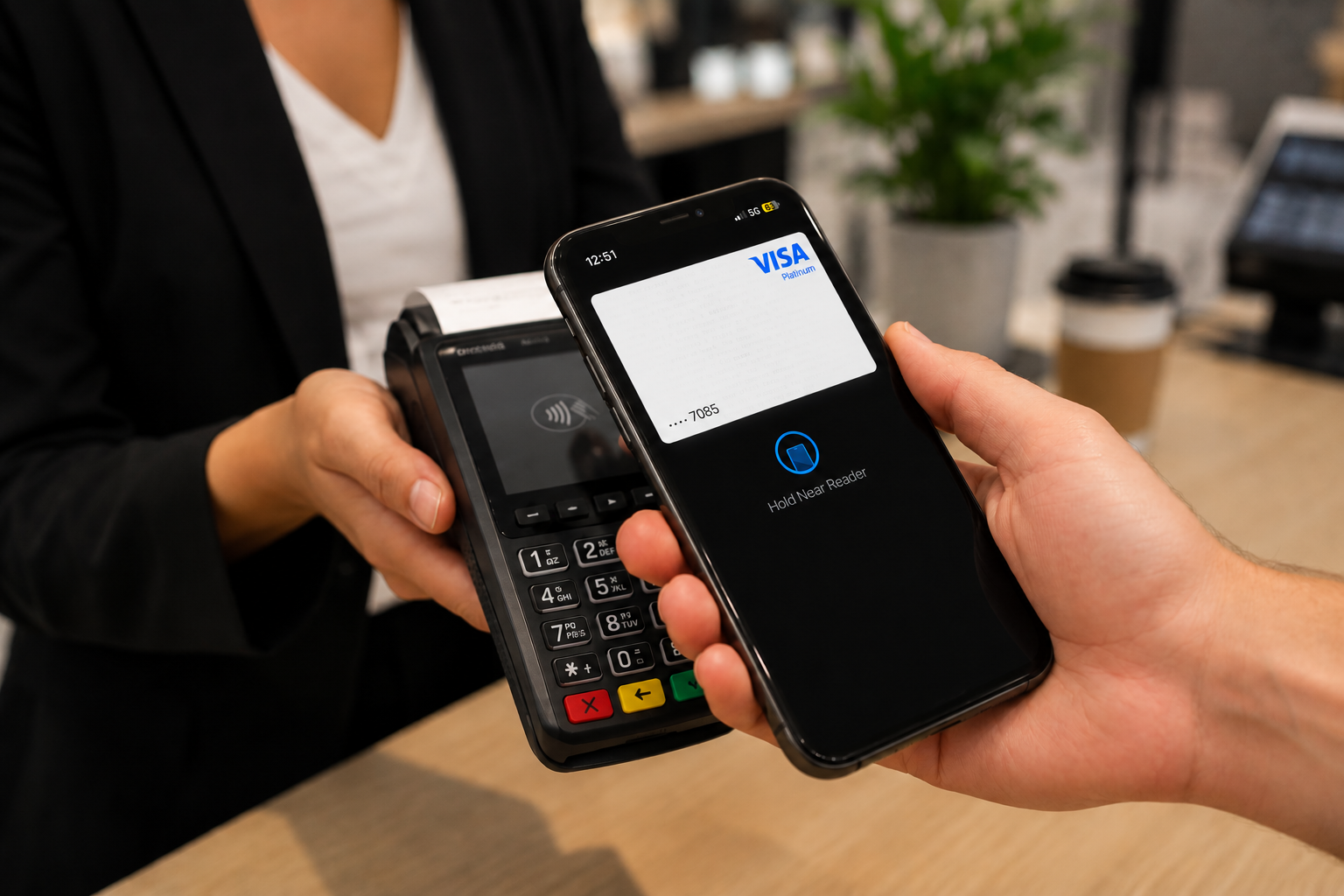
Here's the reality: if a merchant accepts Visa, you can pay with USDT today. You spend your stablecoin balance. The merchant receives the same fiat settlement they always have. Nothing changes on their end.
The Visa network connects over 150 million merchant locations worldwide. When you pay with a USDT-funded Visa card, the transaction flows through the same rails as any other Visa payment.
The process works like this:
From the merchant's perspective, there is no crypto involved. No special terminal. No new integration. The payment arrives like any other Visa transaction.
When people talk about paying with crypto in the real world, they usually mean one of two things:
Option A: Direct crypto transfer. You send USDT directly to a business wallet. The merchant receives and holds the stablecoin. This requires the merchant to have set up crypto acceptance infrastructure, a custody solution, and accounting for digital assets.
Option B: USDT-funded Visa payments. You pay from your USDT balance via a Visa card. The merchant receives fiat. This works at every Visa-accepting merchant on the planet.
Option B is already live everywhere. The infrastructure is already built. The settlement is already in fiat. The only thing that's changed is that you're funding a standard Visa transaction from a USDT wallet instead of a bank account—see Visa settlement flow for how authorization, conversion, and merchant payout work end to end.
Why USDT Makes Sense as an Everyday Payment Method
Stability without surrendering spending power
Unlike Bitcoin or Ethereum, USDT is pegged to the US dollar. When you pay with USDT, you're spending a dollar-denominated asset. There's no risk of paying the equivalent of $50 for a meal and having it represent twice that by the end of the week. What you spend is what you spend.
Spend without cashing out
One of the biggest friction points in using crypto for everyday purchases has always been the off-ramp: converting to fiat, waiting for settlement, and dealing with the tax and fee overhead of each conversion. A USDT Visa card removes that step entirely. Your balance stays in USDT until the moment you tap to pay.
Global usability
USDT is one of the most widely held stablecoins across markets like the UAE, Brazil, Southeast Asia, and Nigeria, regions where it often functions as a practical alternative to local currency. A Visa card funded by USDT lets holders in those markets spend at any Visa terminal without needing a local bank account.
No volatility risk on everyday spending
The conversion from USDT to fiat happens at the point of sale. You're not exposed to price swings between purchase and settlement. For everyday spending, this makes USDT behave exactly like a digital dollar.
Getting set up to pay with USDT via Visa is straightforward:
Do merchants need to do anything special to accept my USDT Visa card?
No. If they accept Visa, they accept your card. The funding source is invisible to them.
What does the transaction look like on my end?
You'll see a USDT deduction from your wallet corresponding to the fiat value of the purchase at the moment of payment, plus any applicable conversion or transaction fees.
Are there fees for spending USDT this way?
It depends on the card provider. Most charge a small conversion or transaction fee. Check the fee schedule of whichever platform you use.
Can I get refunds on USDT Visa purchases?
Yes. Refunds are processed via Visa back to your card, the same as any other Visa transaction.
Does spending USDT via Visa trigger a taxable event?
In most jurisdictions, yes. Converting USDT to fiat, even at the point of sale, is typically treated as a disposal of a crypto asset. The gain or loss is usually minimal given USDT's dollar peg, but you should verify the rules in your jurisdiction.
Can I use this internationally?
Yes. Visa is accepted in over 200 countries and territories. A USDT Visa card works wherever Visa does, with conversion to local currency handled automatically.
Using USDT as a payment method in 2026 doesn't require finding crypto-native merchants, navigating wallet addresses, or convincing anyone to accept stablecoins.
If a merchant accepts Visa, you can pay with your USDT balance today. The infrastructure is already there. The only thing you need is a card that connects your USDT wallet to the Visa network.
How To