News
Oobit
5
MIN READ
June 17, 2026
Sending crypto to a phone number feels like it should be trivial: pick a contact, tap send. The gap between that experience and what happens underneath is where the real engineering, regulatory, and liquidity complexity lives. It's also where two features people constantly confuse - "send by phone number" and "send to a bank account" - turn out to be genuinely different machines.
A blockchain transfer needs an address tied to a specific chain. A phone number identifies a person, not a wallet. So something has to translate the number into an actual destination, and there are three ways to do it:
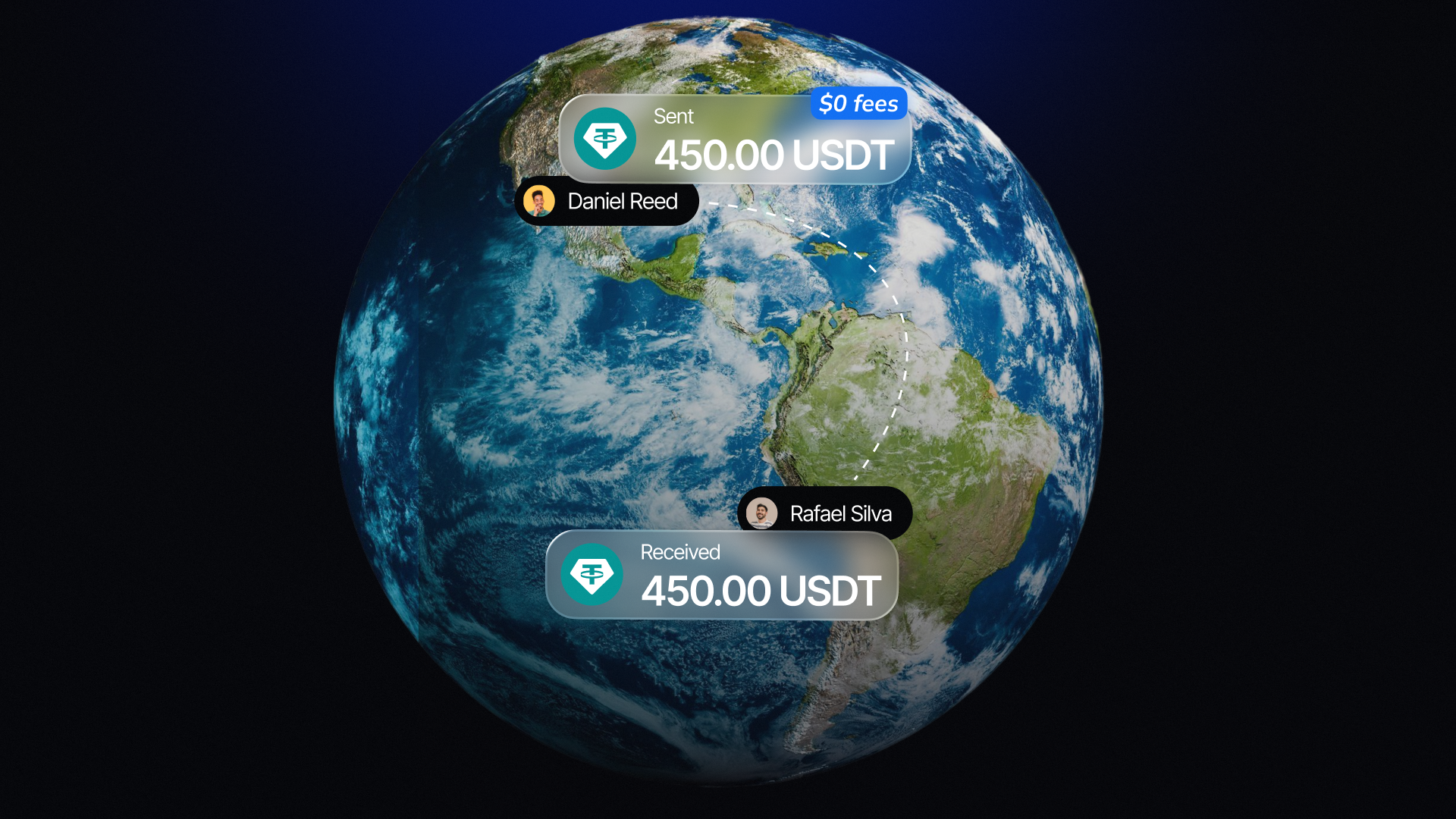
The tagline "send crypto to any phone number" can describe any of the three. Oobit's Sending 2.0, for instance, moves stablecoins to a phone number with no transfer fee and real-time tracking, making the number itself the addressing layer so the sender never touches a wallet string.
The phone-number problem forces a custody decision, and if funds wait for an unregistered recipient, the platform is usually holding them - a custodial arrangement with the trust and regulatory weight that follows.
The alternative keeps funds in the user's own wallet until a payment is authorized, then settles via smart contract. That's Oobit's DePay model: it connects self-custody wallets (MetaMask, Trust Wallet, Phantom and others) and executes gasless, just-in-time swaps at the moment of authorization across chains like Ethereum, Solana, BSC, Tron and Polygon. Funds stay with the user until the transaction confirms, removing both the pre-funding step and the custodial risk of parking assets on a third party before spending.
Here's the distinction people collapse most often. Sending stablecoins to a phone number keeps value inside crypto - the recipient ends up holding crypto. Making it arrive as local currency in a bank account means leaving crypto entirely. That's an off-ramp.
An off-ramp converts crypto to fiat, then needs a licensed entity to push that fiat into the destination banking system. The old way - correspondent banking - chains intermediary banks together, which is why traditional cross-border transfers take days and cost several percent.
The numbers make the gap concrete. According to the World Bank's Remittance Prices Worldwide (Q3 2025), the global average cost of sending $200 was 6.36%, and banks - the channel that leans most on correspondent infrastructure - averaged 14.99%, the most expensive of any provider type. Even the cheapest digital money-transfer operators sit around 3.5%, still above the UN's longstanding 3% target.
The modern way routes into local real-time rails instead: SEPA, ACH, SPEI and their equivalents, collapsing the intermediary chain so funds land in seconds rather than days. This is what Oobit's wallet-to-bank feature does - settling through local rails so the recipient gets local currency in an account under their own name. The takeaway: one app can run two distinct systems - a transfer layer that moves crypto between people, and an off-ramp that converts to fiat - and reading them as separate is the key to understanding what any product actually does (see off-ramp basics).
A single tap hides a back end that isn't simple. Even "zero-fee" transfers carry costs someone absorbs:
So when a transfer is genuinely free - as Oobit's phone-number stablecoin sends are - the cost moved into the spread, the float, or operating overhead rather than disappearing. Worth checking which leg a "zero fee" claim refers to, since it usually applies to a specific path (P2P, remittances) rather than every action in an app.
When evaluating any "send by phone or to a bank" feature, the useful questions are mechanical, not marketing:
These features look identical from outside because consumer crypto is converging on one goal - make digital money behave like a text message - while the infrastructure underneath, across custody models, chains and national banking systems, stays anything but uniform. Combining the layers in one stack is what increasingly defines the category: Oobit pairs spending across Visa's ~150 million merchants, phone-number transfers, and wallet-to-bank settlement in 150+ countries, backed by Tether. Understanding the seams is what separates an informed read of the market from taking the tagline at face value.
News