Back

Alex Obchakevich
Back
Alex Obchakevich
September 14, 2026
•
5
min read
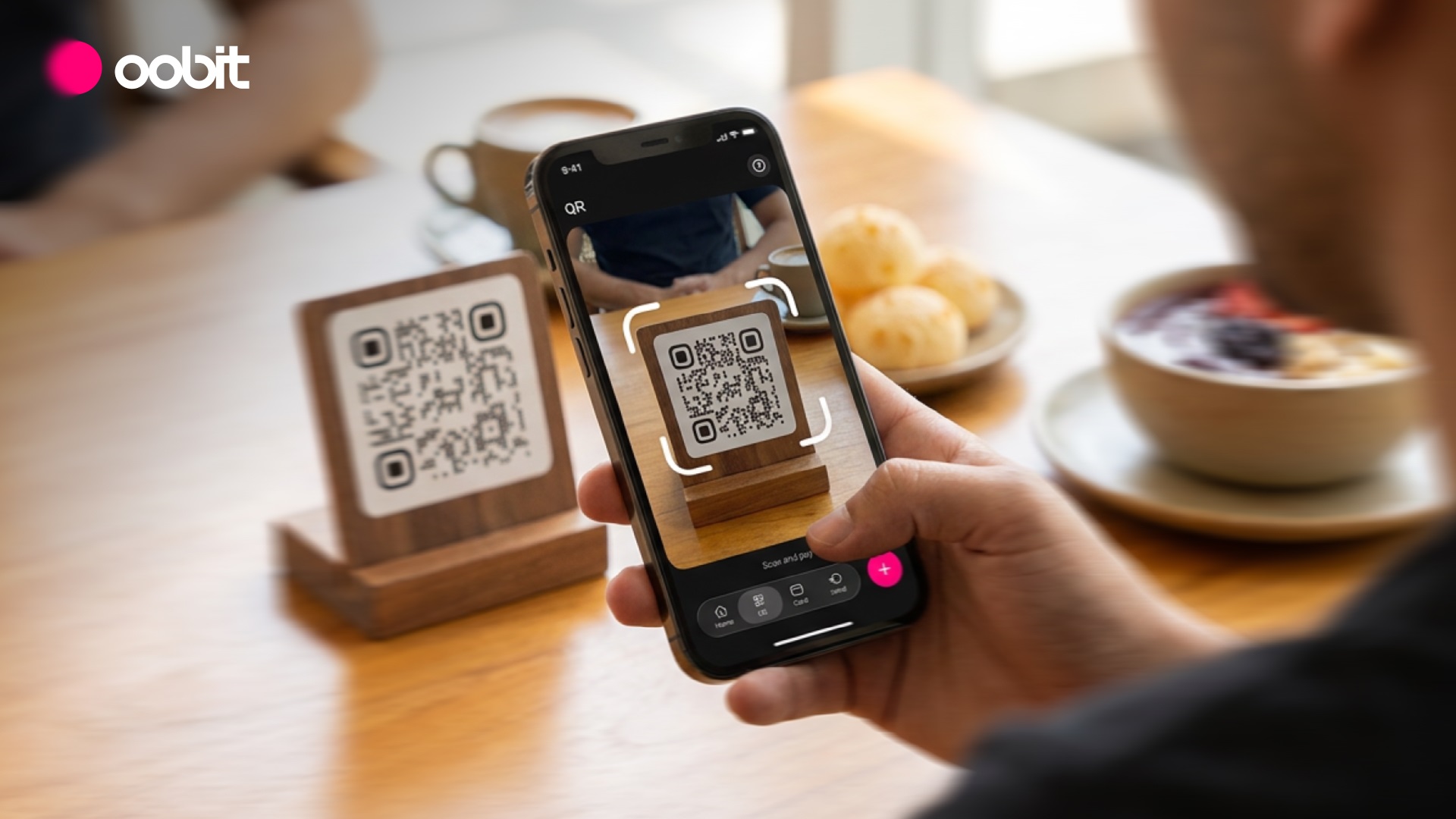
Table of contents
No sections found
✓
The conversation about crypto payments is almost always conducted in the language of cards: will they accept it, where, how much the network takes. That is the logic of markets where a card terminal sits in every coffee shop. In Brazil, the Philippines or Kenya that logic does not hold, because everyday payments there took a different route. The terminal came late or never came at all, and its place was taken by a QR code or a mobile wallet number at the till.
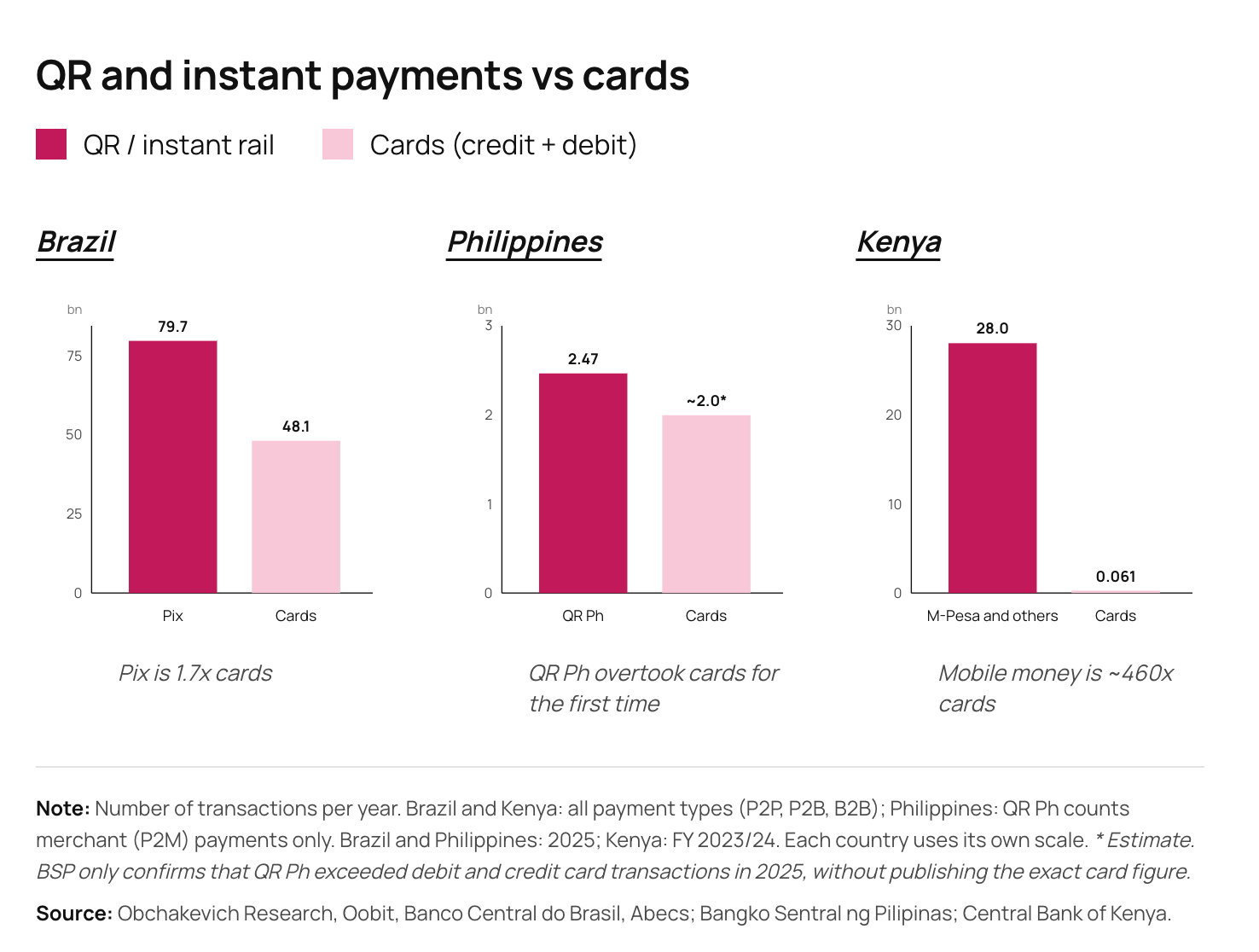
The numbers speak for themselves. In Brazil, the instant payment system Pix processed 79.7B transactions in 2025 against 48.1B on cards, with the QR code becoming its standard way to pay at the till - 1.7 times more, and the gap is widening, since Pix adds over 25% a year while cards add about 5% ( 2025 data ). In the Philippines, QR Ph handled 2.47B payments in 2025 - merchant payments only, with no person-to-person transfers counted - and, according to the central bank, overtook debit and credit cards combined for the first time. Kenya is a case of its own: 28B mobile money transactions in fiscal year 2023/24 against 61M on cards, meaning roughly 460 mobile money payments, mostly M-Pesa, for every card payment. In these countries the question "does the merchant accept crypto" makes no sense. The merchant accepts QR and has no plans to accept anything else.
This is why QR payments in Oobit are not one more feature on a list but a different model of access. The user scans the same code that hangs at the till and pays in USDT from their balance. The merchant receives reais, pesos or shillings through the network they already use. The conversion happens inside the payment rather than before it, and the merchant never even knows a stablecoin was on the other side.
Classic crypto acquiring asks the merchant to integrate a new payment method for the sake of a small share of customers - and in ten years it has never gone mainstream. Oobit does the opposite: it connects the customer to the method the merchant already chose, one that has already beaten cards in that market. No adoption is needed at all.
A card on Visa rails covers the world where Visa exists. QR covers the world where, in practice, it does not. In the markets where Oobit is building local payments, the second matters more than the first.
Open your treasury, hold dollars, and start paying the world.
Abre tu tesorería, guarda dólares y empieza a pagarle al mundo.
Abra seu tesouro, guarde dólares e comece a pagar o mundo.
If you're excited by the future of money, we'd love to hear from you.
Scan the QR code to download the app

The People's Money.
Pay with Oobit
Crypto CardLocal QR PaymentsATM WithdrawalsCrypto Cashback Agent CardsOobit DePay
Pay with BitcoinPay with OOBPay with USDTPay with EthereumPay with SolanaStablecoin
Oobit For Business
BlogStablecoin PaymentsGlobal USDCorporate CardExpense Managment
Oobit Technologies 2026. © All rights reserved.
Oobit provides technology that enables users to spend digital assets through existing payment networks. Services are subject to regional availability and regulatory requirements. Oobit operates through multiple entities globally. Certain features may be provided by licensed partners depending on your location.
US Cryptocurrency services are provided in partnership with Bakkt Financial Solutions I, LLC. Bakkt is registered with FinCEN as a Money Services Business (MSB) and holds state money transmitter licenses.