Back

Bernard Fisher
Back
Bernard Fisher
August 31, 2026
•
10
min read
_2026-08-31_11-04-40.avif)
Table of contents
Growth that has outpaced the broader crypto market
The gap between transaction volume and real payments is closing
LATAM is where stablecoins are already everyday money
The same pattern is emerging outside LATAM
Remittances show the same pattern
✓
Stablecoins have grown from a crypto-trading tool into a settlement layer that increasingly resembles everyday financial infrastructure. The data on adoption, remittances, and real consumer spending all point the same direction: stablecoins are moving from something people hold to something people actually use to pay for groceries, rent, and daily life.
Three things separate money people hold from money people spend: it has to be cheap to move, legal to use, and accepted wherever they shop. Stablecoins have spent the last two years closing all three gaps at once, which is why adoption is now showing up in spending data instead of just supply figures.
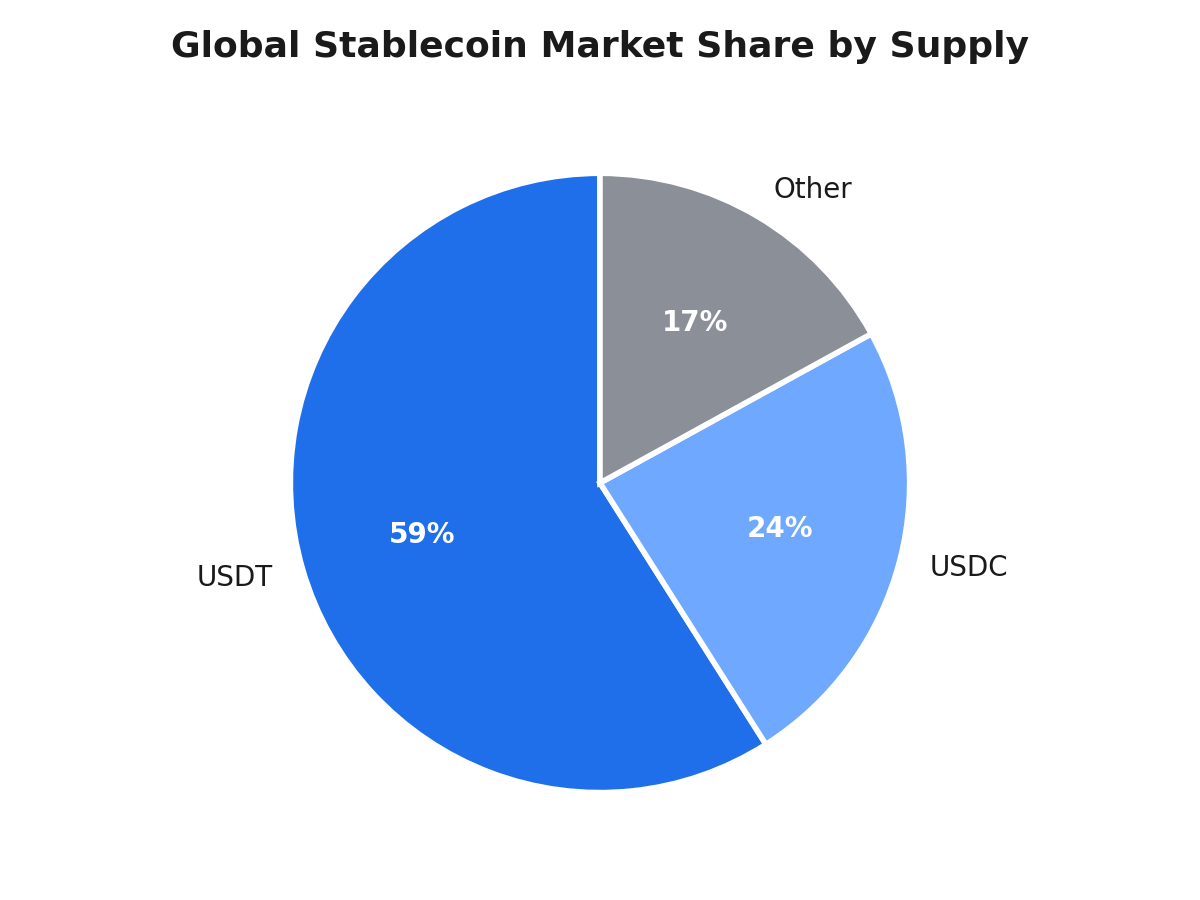
Stablecoin supply grew 14.3% year over year through mid-2026, and annual transfer volume rose 72% year over year in 2025, now approaching the throughput of major card networks. Two issuers, USDT and USDC, still account for 83% of all stablecoin supply, and nearly 100% of the market remains dollar-denominated. That concentration matters for the "everyday money" thesis: the story is really about digital dollars becoming usable outside the traditional banking system, not about crypto speculation.
Regulation removed a major barrier to that shift. The passage of the US GENIUS Act in 2025 gave issuers legal clarity on reserves, and the IMF estimates the law alone erased about 18% of the market value of incumbent cross-border payment firms, a sign that markets already expect stablecoins to take real share from legacy rails. Bank forecasts reflect the same confidence: Citi's base case implies supply growth of roughly 500% by 2030, with a bull case above 1,100%.
Most stablecoin transfer volume today is still trading and inter-wallet movement rather than commerce, with genuine real-economy payments estimated at only 1 to 2% of gross transfer volume. That gap is exactly why the next phase of adoption matters more than the market cap headlines. Visa's stablecoin-linked card spend grew 460% year over year through late 2025, and Visa, Mastercard, Stripe, and Shopify have all built stablecoin settlement into core products in 2026, often letting a shopper tap a normal card while the merchant settles in a stablecoin behind the scenes. That kind of invisible infrastructure, like Oobit's own crypto card, is what turns stablecoins into money people spend without thinking about the technology underneath.
Oobit's own transaction data shows this shift happening in real time: card spending volume on the platform grew 270% over six months through August 2026, a pace the company attributes directly to crypto card spending going mainstream rather than to trading activity.
Latin America is no longer a leading indicator. It is the clearest live example of stablecoins functioning as daily currency rather than an investment.
In Brazil, Oobit's own user data shows 91.8% of crypto holders already hold stablecoins, and 85% say they want to spend them daily. Until recently only 37% actually could, because merchants and payment rails were not built for stablecoin spending. That gap between intent and access is precisely what card-based and QR-based stablecoin payment infrastructure is closing, and connecting the digital dollar directly into Brazil's Pix network has extended that reach to over 170 million Brazilians.
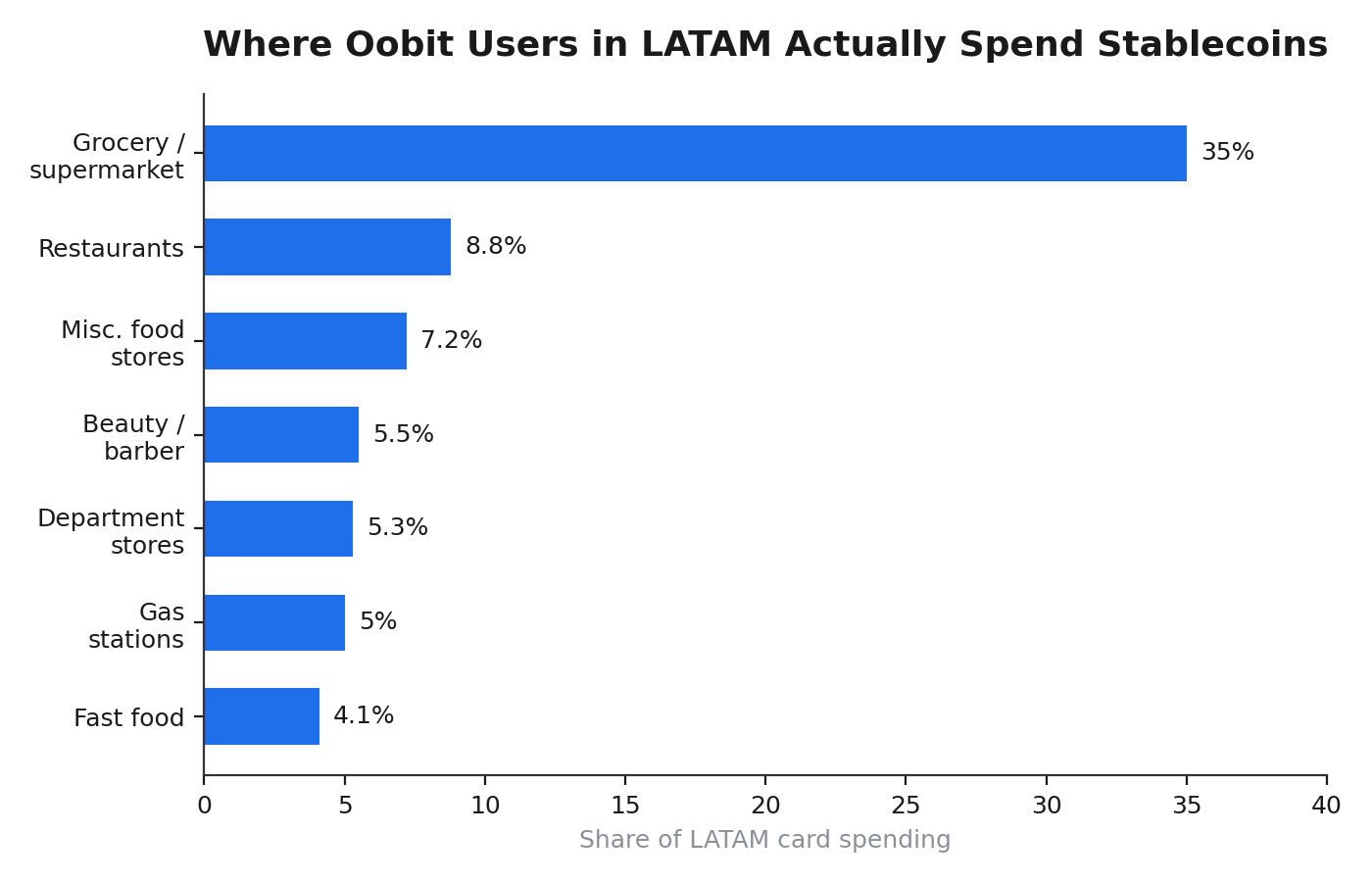
The spending pattern that results looks exactly like ordinary consumer behavior, not trading activity. Grocery stores and supermarkets account for 35% of card spending across LATAM, followed by restaurants at 8.8%, miscellaneous food stores at 7.2%, department stores at 5.3%, beauty and barber shops at 5.5%, gas stations at 5%, and fast food at 4.1%. People are not holding stablecoins and waiting. They are paying for groceries, haircuts, and gas with them.
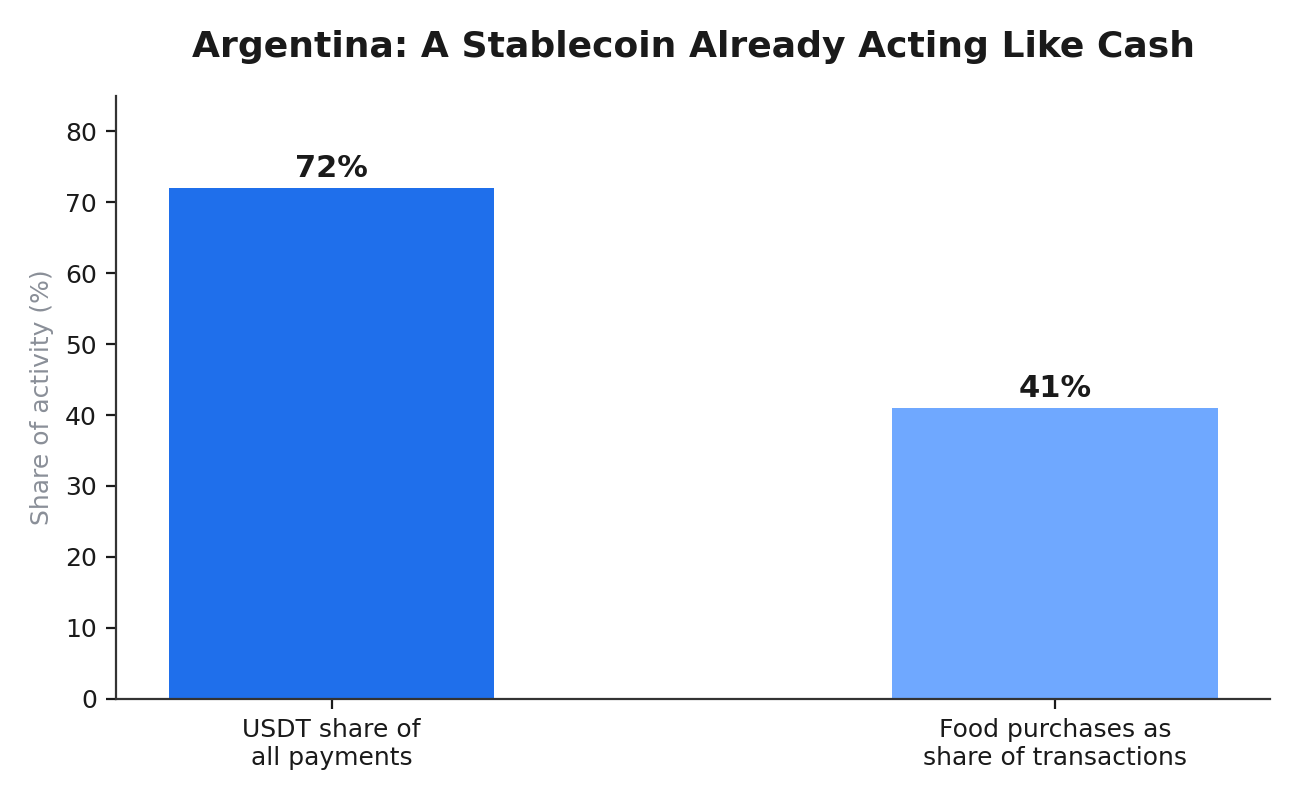
Argentina shows an even sharper version of the same pattern. USDT funds 72% of all Oobit payments in the country, and food purchases alone represent 41% of transactions, evidence that a specific stablecoin has become the default currency for a specific everyday need rather than a diversified crypto portfolio. These Argentina figures were independently reported by CoinDesk and CoinMarketCap as part of wider coverage showing crypto card spending crossing a billion dollars in volume. Bolivia is moving the same direction from a smaller base, with USDT transaction volumes surging 630% as new merchant and cash-out infrastructure made those balances spendable rather than just holdable.
Brazil is now Oobit's largest market, representing 61% of users, and activity there grew 202% since launch. Across the wider region, 71% of Latin American firms already use stablecoins for cross-border settlement, and B2B stablecoin payment volume in emerging markets grew 733% year over year. On the consumer side, sending digital dollars directly into local bank accounts through rails like Pix or Mexico's SPEI has made the conversion from crypto to spendable local currency close to instant, which is a big part of why usage keeps compounding rather than plateauing.
LATAM is the furthest along, but it is not an isolated case. In the United States, everyday categories such as restaurants, fast food and coffee, gas stations, and groceries now make up a combined 53% of all Oobit card transactions, with stablecoins representing 64% of total payment volume there. In the EU, USDT alone has accounted for as much as 92% of crypto payments processed on the platform. This US and EU breakdown was reported by Invezz and syndicated on TradingView, and the 53% everyday-category figure was independently corroborated by Cobo's analysis of 76 weeks of data across 16 crypto payment cards. The category mix differs by region, but the underlying behavior does not: people are increasingly reaching for a stablecoin balance the same way they would reach for a debit card.
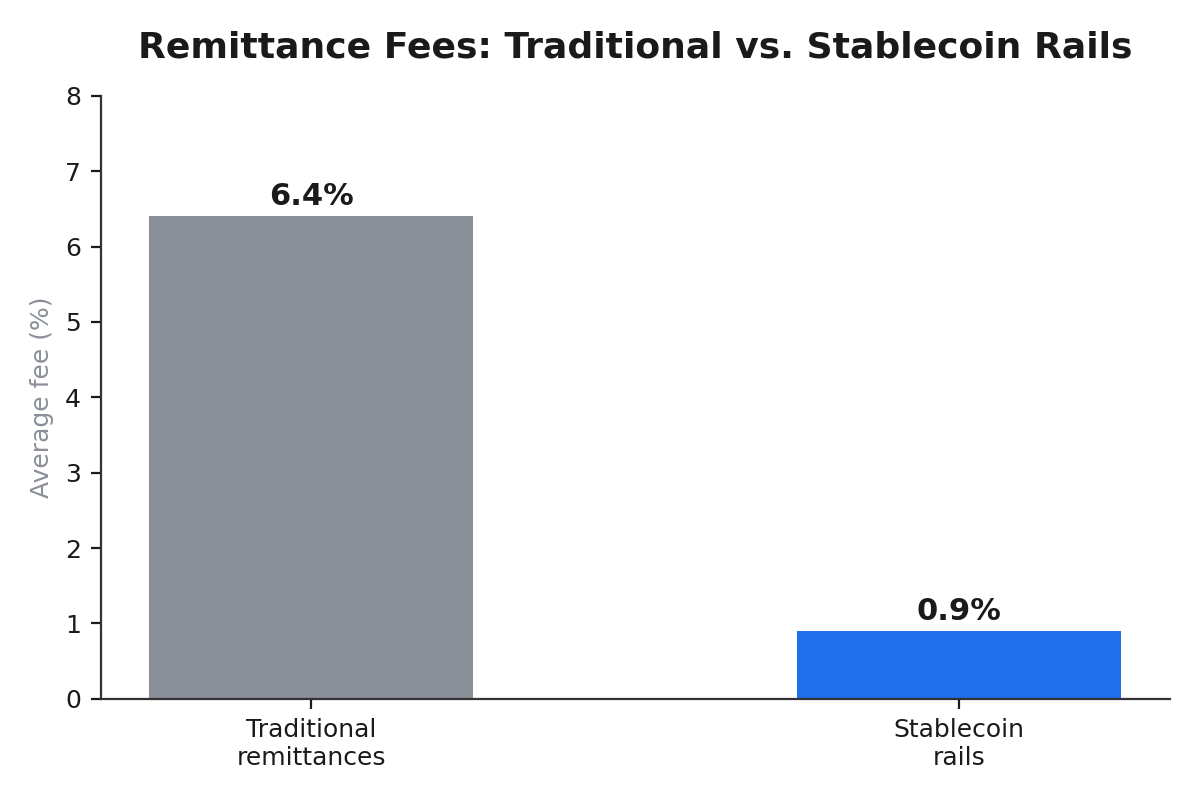
The economics driving this adoption apply globally. Traditional remittances still average 6.3 to 6.5% in fees worldwide, and Sub-Saharan African corridors run even higher, where 57% of adults remain unbanked entirely. Stablecoin rails routinely bring that cost under 1% and cut settlement from days to minutes, which is why 41% of businesses that have adopted stablecoins report cost savings of 10% or more, mostly on cross-border payments.
Three things stand between the current numbers and stablecoins becoming genuinely mainstream money rather than infrastructure used mostly by crypto-native businesses and traders:
The mechanism is straightforward: falling remittance costs, GENIUS Act regulatory clarity, and merchant-facing card infrastructure are removing the three barriers that kept stablecoins confined to trading. Brazil shows what happens when all three align: 91.8% stablecoin ownership among crypto holders, but only 37% able to spend daily until card and Pix rails closed the gap. That is not a LATAM peculiarity. It is the same sequence now playing out in Argentina, Bolivia, the US, and the EU, just at different stages.
The honest caveat is timing, not direction. Real commerce is still only 1 to 2% of gross transfer volume globally, and most of the world outside the US has not yet passed GENIUS Act equivalent legislation. Stablecoins becoming everyday money is not a question of whether the mechanism works. LATAM already proves it does. It is a question of how fast merchant acceptance and regulation catch up to consumer demand elsewhere, and on current growth rates that gap looks like years, not decades. Learn more about how Oobit is allowing users to pay with crypto across 80+ countries.
Open your treasury, hold dollars, and start paying the world.
Abre tu tesorería, guarda dólares y empieza a pagarle al mundo.
Abra seu tesouro, guarde dólares e comece a pagar o mundo.
If you're excited by the future of money, we'd love to hear from you.
Scan the QR code to download the app

The People's Money.
Pay with Oobit
Crypto CardLocal QR PaymentsATM WithdrawalsCrypto Cashback Agent CardsOobit DePay
Pay with BitcoinPay with OOBPay with USDTPay with EthereumPay with SolanaStablecoin
Oobit For Business
BlogStablecoin PaymentsGlobal USDCorporate CardExpense Managment
Oobit Technologies 2026. © All rights reserved.
Oobit provides technology that enables users to spend digital assets through existing payment networks. Services are subject to regional availability and regulatory requirements. Oobit operates through multiple entities globally. Certain features may be provided by licensed partners depending on your location.
US Cryptocurrency services are provided in partnership with Bakkt Financial Solutions I, LLC. Bakkt is registered with FinCEN as a Money Services Business (MSB) and holds state money transmitter licenses.