Descarga la aplicación Oobit para pagar con criptomonedas en todas partes.
Escanea el código QR para descargar la aplicación






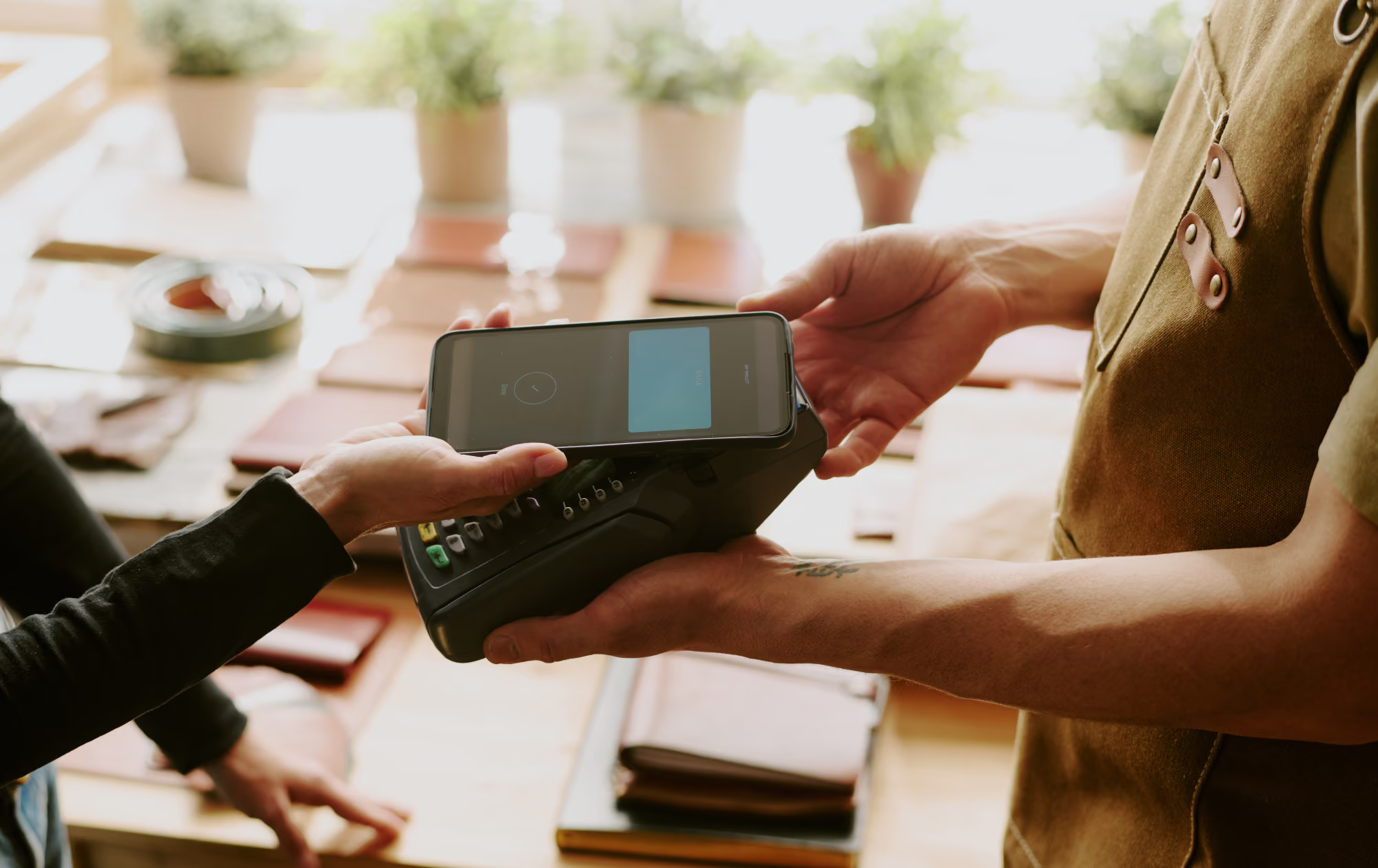
El pago sin contacto solía parecer una novedad. Para muchas personas, ahora es simplemente la norma. Oobit encuestó a 1000 adultos estadounidenses para averiguar con qué frecuencia salen de casa sin billetera, dónde siguen ganando las tarjetas físicas y qué se necesitaría para empezar a pagar con criptomonedas de la misma forma en que ya pagan todo lo demás.
El abandono de las tarjetas físicas no es uniforme. Es una historia generacional, y la Generación Z está a la vanguardia.
La posesión de criptomonedas ya no es algo marginal. La brecha está en lo que los propietarios hacen realmente con lo que tienen.
Los datos apuntan a un cambio desigual. El pago sin contacto se ha generalizado, especialmente entre los estadounidenses más jóvenes, pero la mayoría de los propietarios de criptomonedas no han conectado lo que poseen con la forma en que pagan realmente. Los incentivos que, según la gente, cambiarían eso se parecen mucho a lo que ya los mantiene fieles a sus tarjetas de recompensas actuales: reembolso en efectivo (cashback), conversión a dólares más sencilla y comisiones más bajas. Los estadounidenses más abiertos a usar criptomonedas en su billetera son los que ya pagan con sus teléfonos.
"La billetera no está desapareciendo porque alguien lo haya planeado así. Es porque el teléfono se ha vuelto lo suficientemente bueno. Las criptomonedas están en una situación similar ahora. La infraestructura existe. Lo que queda es hacer que se sienta como cualquier otra cosa que la gente ya hace al pagar".
— Amram Adar, director ejecutivo, Oobit
Oobit encuestó a 1000 adultos estadounidenses sobre sus hábitos de pago, actitudes hacia la billetera física, posesión de criptomonedas y opiniones sobre los métodos de pago financiados con cripto. La encuesta se realizó a través de CloudResearch Connect. Los encuestados fueron 51% mujeres y 49% hombres. El desglose generacional fue: 50% millennials, 23% generación X, 17% generación Z y 9% baby boomers. Los ingresos de los encuestados oscilaron entre menos de 25 000 $ (22%), de 25 000 $ a 50 000 $ (23%), de 50 000 $ a 100 000 $ (37%), de 100 000 $ a 150 000 $ (12%) y más de 150 000 $ (6%), con una mediana de 50 000 $. El margen de error es de ±3,1% con un nivel de confianza del 95%.
Oobit es una solución de pagos y tarjeta cripto que permite a los usuarios pagar con activos digitales directamente desde su teléfono, sin necesidad de una tarjeta física. Mediante tecnología NFC, Oobit convierte criptomonedas a moneda local en el punto de venta, por lo que los usuarios pueden gastar Bitcoin, USDT y otros activos digitales en cualquier lugar donde se acepte Visa, ya sea en línea o en tiendas físicas. Además de realizar pagos, Oobit también le permite enviar criptomonedas a una cuenta bancaria o a otra persona, haciendo que mover activos digitales sea tan sencillo como pagar en caja.
La información de este artículo puede utilizarse únicamente con fines no comerciales. Si se comparte, debe incluirse la atribución correspondiente con un enlace a Oobit.
Not long ago, tipping meant dropping a few coins in a jar or scribbling a number on a receipt while no one watched. Today a screen spins around at the counter, three bold percentages stare back, and a worker waits for an answer. To find out how that moment reshaped American tipping, we surveyed 1,005 U.S. adults about their habits, their feelings about on-screen prompts, and where they have started to push back.
The results describe a country that feels cornered by the prompt. Screens have changed the emotions around tipping, nudged up what people pay, and hardened opinions about which requests have gone too far.
The turning screen changes the emotional register of tipping before a single button is pressed.
.png)
When the screen swiveled toward them to ask for a tip, nearly half of Americans (48%) reached for a negative word, describing the moment as pressuring or guilt-inducing, while just 4% called it happy. Fewer than half (42%) said genuine appreciation drives what they leave, and the rest pointed to social pressure or a mix of the two.
The audience matters as much as the service. More than two-fifths of Americans (42%) admitted they had tipped mainly because someone could see the choice, a share that climbed to 49% of Gen Z but fell to 27% of baby boomers, and women (46%) were more likely than men (38%) to tip for show. Twenty-nine percent of cash-first tippers had even invented an excuse to dodge the screen, almost twice the rate of card users (16%).
Privacy would change the math for younger tippers. A quarter of Gen Z Americans (25%) and 26% of millennials said they would tip less if their choice were hidden from the worker and other customers, compared with just 12% of baby boomers.
Preset buttons do work, and the size of that nudge shows up in what people actually pay.
.png)
Nearly half of Americans (45%) had left a bigger tip than they meant to simply because tapping past the default felt awkward, and the pull was strongest on the youngest tippers, from 58% of Gen Z down to 26% of baby boomers. Women (48%) were more likely than men (40%) to over-tip that way, as were people who currently work a tipped job (50%).
Across a typical year, American adults spent an average of about $674 on tips. Screens appear to add to that total for some, as more than a quarter of card users (26%) said a preset raises their tip, over two times the rate of cash tippers (10%).
Most Americans set a low ceiling for counter service, and 43% said 10% or less was the most they would accept as a preset. A new federal tax break has done little to loosen that stance, and 70% of Americans said the 2025 law making up to $25,000 in tips tax-free for workers made no difference to what they leave, a view held by 77% of Gen X but only 57% of Gen Z.
The backlash has a clear map, and it separates traditional service from the places where a prompt now feels like an ambush.
.avif)
Self-checkout drew the sharpest rejection, with 82% calling a tip request there unreasonable, followed by vending kiosks (81%), and medical or dental offices (77%). Traditional service still earned goodwill, with only 11% objecting to tipping at a barbershop or hair salon and 17% at a tattoo shop.
That resentment is changing where people spend. More than a third of Americans (37%) had stopped going to a business because its tip prompts felt too aggressive, rising to 40% of millennials and 42% of those who have worked a tipped job. More than half (53%) said constant prompts had made them less generous where tipping is traditionally expected, a figure that reached 62% of Gen Z.
Delivery carries its own anxiety. Nearly three in four Americans (73%) worried a low tip or no tip could get their order treated worse, and 65% preferred to decide the tip after the food arrived. Underlying it all is a trust gap, as only 30% of Americans were confident their tip actually reaches the worker rather than the business, and cash tippers (39%) trusted that handoff far more than card users (28%).
The discomfort Americans described was rarely about generosity itself. It was about performance, pressure, and doubt over where the money goes. People bristled at being watched, at defaults that assume the answer, and at prompts in places that never asked before. For anyone who depends on tips, the lesson is that clarity beats coercion, and making the ask optional, private, and transparent is what will keep tipping from wearing out its welcome.
Oobit surveyed 1,005 Americans about their tipping habits, their emotional reactions to on-screen tip prompts, how digital payment screens have changed what they tip and where they believe tipping requests have gone too far. The survey was conducted via CloudResearch Connect in July 2026. Respondents were 54% women, 45% men, and 1% who were non-binary or preferred not to say. Generational breakdown was 48% millennials, 23% Gen X, 19% Gen Z, and 9% baby boomers.
Oobit is a crypto card and payments platform that enables users to spend digital assets in the real world wherever major cards are accepted. Oobit bridges crypto and everyday commerce, making digital currency practical and accessible for daily use.
The information in this article may be used for noncommercial purposes only. If shared, proper attribution with a link to Oobit must be included.





%202.svg)