
Back
Oobit
June 30, 2026
•
5
min read
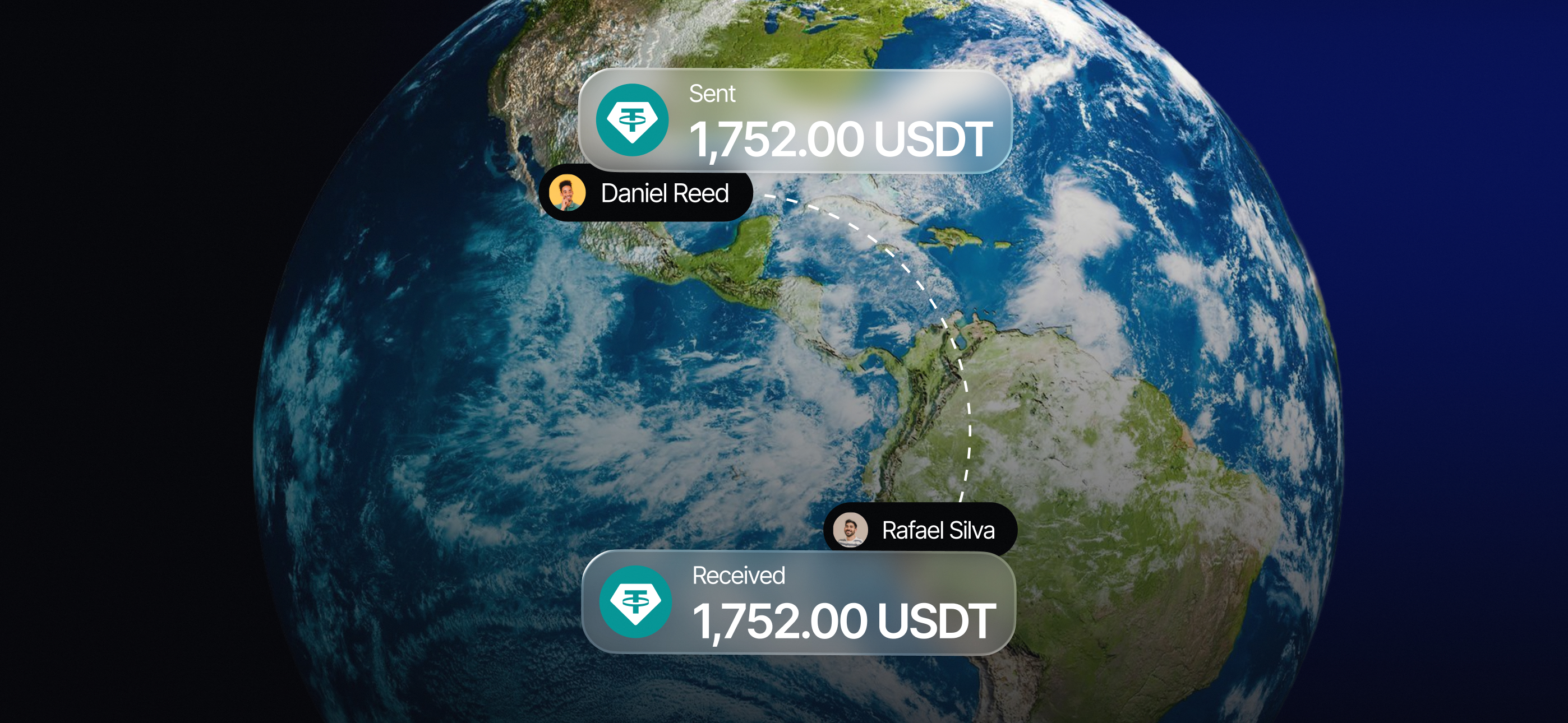
Table of contents
Defining a Stablecoin Transfer
How a Stablecoin Transfer Works
Stablecoin Transfers vs. Traditional Money Transfers
What to Check Before Sending a Stablecoin Transfer
Sending Stablecoins for Free with Oobit
✓
If you have ever sent money abroad through a bank, you know the drill: a multi-day wait, a vague exchange rate, and a fee that only shows up after the transfer is already gone. Stablecoin transfers were built to solve exactly that problem. They move dollar-backed digital money across borders in minutes, at a fraction of the cost, without the unpredictability of trading volatile crypto assets.
This guide breaks down what a stablecoin transfer actually is, how it works under the hood, and why it has become one of the fastest-growing ways to move money globally.
A stablecoin transfer is the act of sending a stablecoin, a type of cryptocurrency pegged to a stable asset like the US dollar, from one wallet to another. Unlike sending Bitcoin or Ethereum, where the value of what you send can swing wildly between the time you hit "send" and the time it arrives, a stablecoin transfer moves a fixed amount of dollar value. If you send 100 USDT, the recipient gets the equivalent of 100 US dollars, regardless of what is happening in the broader crypto market that day.
The most widely used stablecoins for transfers are USDT (Tether) and USDC (USD Coin), both pegged 1:1 to the US dollar and backed by reserves held by their issuers. Because they combine the price stability of fiat currency with the speed and openness of blockchain technology, stablecoins have become the default tool for cross-border payments, remittances, and everyday crypto spending.
At a technical level, a stablecoin transfer follows the same basic mechanics as any other crypto transaction, with a few extra considerations because of how stablecoins are issued.
1. The sender initiates the transfer. Using a wallet app or exchange, the sender enters the recipient's wallet address and the amount of stablecoin to send.
2. The transaction is broadcast to a blockchain network. Stablecoins are not tied to a single blockchain. USDT and USDC both exist on multiple networks, including Ethereum, Tron, Solana, and Polygon, among others. The sender needs to choose the right network, and the recipient's wallet needs to support it, or the funds can become difficult to recover.
3. The network validates and confirms the transaction. Depending on the blockchain, this can take anywhere from a few seconds (Solana, Tron) to several minutes (Ethereum during periods of congestion).
4. The recipient's wallet reflects the new balance. Once confirmed, the stablecoin appears in the recipient's wallet and can be spent, converted, or transferred again immediately.
The entire process typically takes minutes, not days, and operates 24/7, including weekends and holidays when traditional banking rails are closed.
One detail that trips up a lot of newcomers: the same stablecoin can move at very different speeds and costs depending on which blockchain it travels on.
Sending a stablecoin on the wrong network, or to a wallet that does not support that network, is one of the most common ways crypto users lose funds. This is why reputable wallets and platforms clearly label which network a transfer will use before confirming.
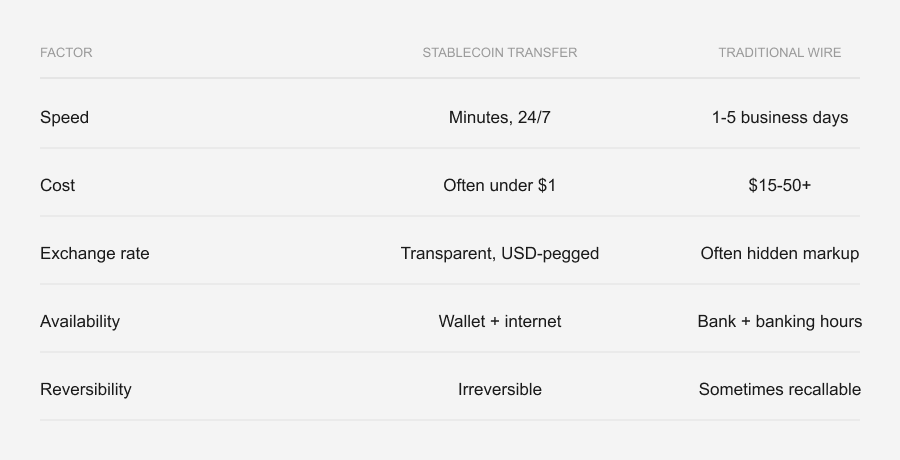
That last row matters. Because blockchain transactions are final, there is no customer service line to call if you send funds to the wrong address. This trade-off, speed and low cost in exchange for irreversibility, is central to understanding stablecoin transfers.
Stablecoin transfers have moved well beyond crypto trading desks. Some of the most common real-world applications include:
Cross-border remittances. Migrant workers sending money home can avoid the high fees and slow processing times associated with traditional remittance services, particularly valuable for corridors with limited banking infrastructure. For a step-by-step walkthrough of how to send USDT straight to a bank account, the process takes minutes rather than days.
Freelancer and business payments. International freelancers and contractors increasingly request stablecoin payment instead of bank wires, to avoid currency conversion losses and multi-day settlement delays.
Saving in dollar terms. In countries with high inflation or currency instability, holding stablecoins offers a way to preserve value in US dollar terms without needing a US bank account.
Everyday spending. With the rise of crypto-linked cards and apps, stablecoins held in a wallet can now be spent directly at any merchant that accepts standard card payments, with the conversion from crypto to local currency happening automatically at checkout.
Because these transfers are irreversible, a few checks go a long way:
With Oobit, sending crypto to another Oobit user is free and instant, app to app, no network fees, no blockchain matching, no confirmation wait. The transfer happens directly between accounts, so splitting a bill or paying someone back feels more like sending a message than executing a blockchain transaction. Transfers to wallets outside the app still follow standard network rules.
A stablecoin transfer combines the price stability people expect from traditional money with the speed, low cost, and accessibility of blockchain technology. Whether it is a worker sending savings home, a business settling an invoice across borders, or someone simply moving dollars between wallets, stablecoin transfers have become a practical alternative to the slower, costlier rails of traditional finance, with the one caveat that getting the details right matters more, since there is no undo button once a transfer is confirmed.
Latest articles
_2026-09-28_13-19-05.png)
Grok Bot AI Payments: A Guide to Grok Payments With Crypto
September 28, 2026
•
5
min read
_2026-09-28_13-00-35.png)
Meta Muse AI Agent Payments: How to Let Muse Shop With Your Crypto
September 28, 2026
•
5
min read

How to Pay for Flights With Crypto
September 28, 2026
•
5
min read
Open your treasury, hold dollars, and start paying the world.
Abre tu tesorería, guarda dólares y empieza a pagarle al mundo.
Abra seu tesouro, guarde dólares e comece a pagar o mundo.
If you're excited by the future of money, we'd love to hear from you.
Scan the QR code to download the app

The People's Money.
Pay with Oobit
Crypto CardLocal QR PaymentsATM WithdrawalsCrypto Cashback Ai PaymentsOobit DePay
Pay with BitcoinPay with OOBPay with USDTPay with EthereumPay with SolanaStablecoin
Send Money
Send Crypto to BankSend Money InternationallySend Money to the USASend Money to BrazilSend Money to ArgentinaSend Money to the UAEBlog
Oobit For Business
BlogStablecoin PaymentsGlobal USDCorporate CardExpense Managment
Company
NewsAboutCareersBlogResearchPrivacy NoticeTerms of UseFAQs
Oobit Technologies 2026. © All rights reserved.
Oobit provides technology that enables users to spend digital assets through existing payment networks. Services are subject to regional availability and regulatory requirements. Oobit operates through multiple entities globally. Certain features may be provided by licensed partners depending on your location.
US Cryptocurrency services are provided in partnership with Bakkt Financial Solutions I, LLC. Bakkt is registered with FinCEN as a Money Services Business (MSB) and holds state money transmitter licenses.