Download oobit app to pay with crypto everywhere.

Scan the QR code to download the app






These days, holiday shopping doesn't wait for December. A lot of people get started while it's still warm out, picking up gifts and sorting out their budget long before the tree goes up.
We wanted to see just how early the season really kicks off, so we asked 1,007 Americans when they start shopping, where their money goes besides gifts, and how they like to pay for it all. What we found is a holiday season that can start as early as September, with more people wanting their spending to earn something back.
For a lot of people, the holidays begin quietly, months ahead, with a gift picked up here and a little money set aside there. By the time the season officially arrives, plenty of shoppers are already well on their way.
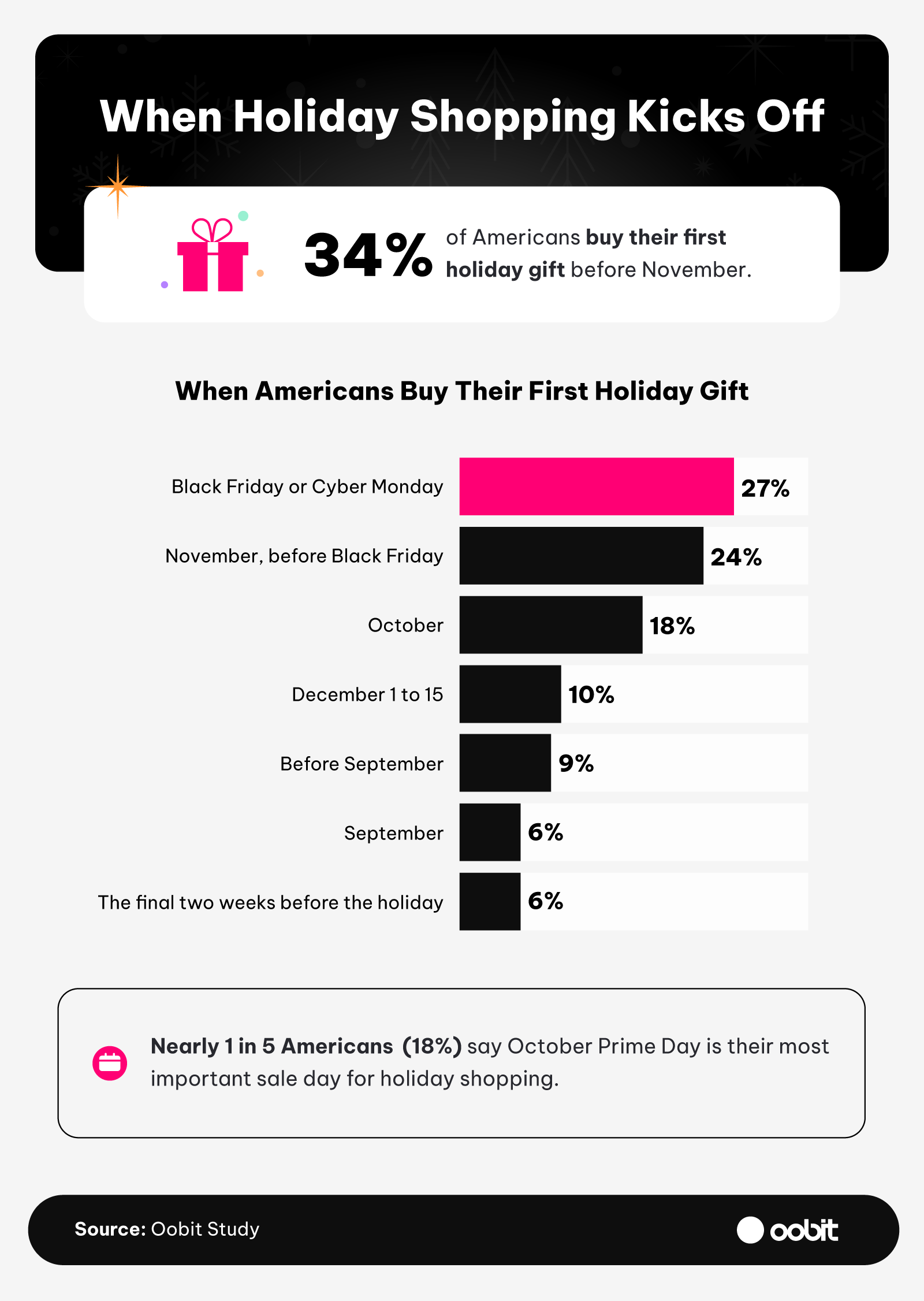
More than 1 in 3 Americans (34%) bought, or planned to buy, their first holiday gift before November, and nearly 1 in 10 (9%) got started before September even arrived. Parents moved fastest at 41%, and women (37%) outpaced men (31%). For many, starting months in advance is about budgeting and timing.
One-quarter of Americans (25%) shopped early to spread the cost across multiple paychecks, a habit reported by 34% of parents. And nearly 1 in 5 (18%) said October Prime Day was their most important sale day for holiday shopping. That share climbed to 21% of parents and 23% of crypto card owners.
Another 1 in 10 (10%) got a head start mainly to beat rising prices or tariffs, a motive that jumped to 22% of crypto card owners. This was also more common among Gen Z (14%) and millennials (11%) than among Gen X (8%) and baby boomers (4%).
Gifts are only the beginning of what the season costs.
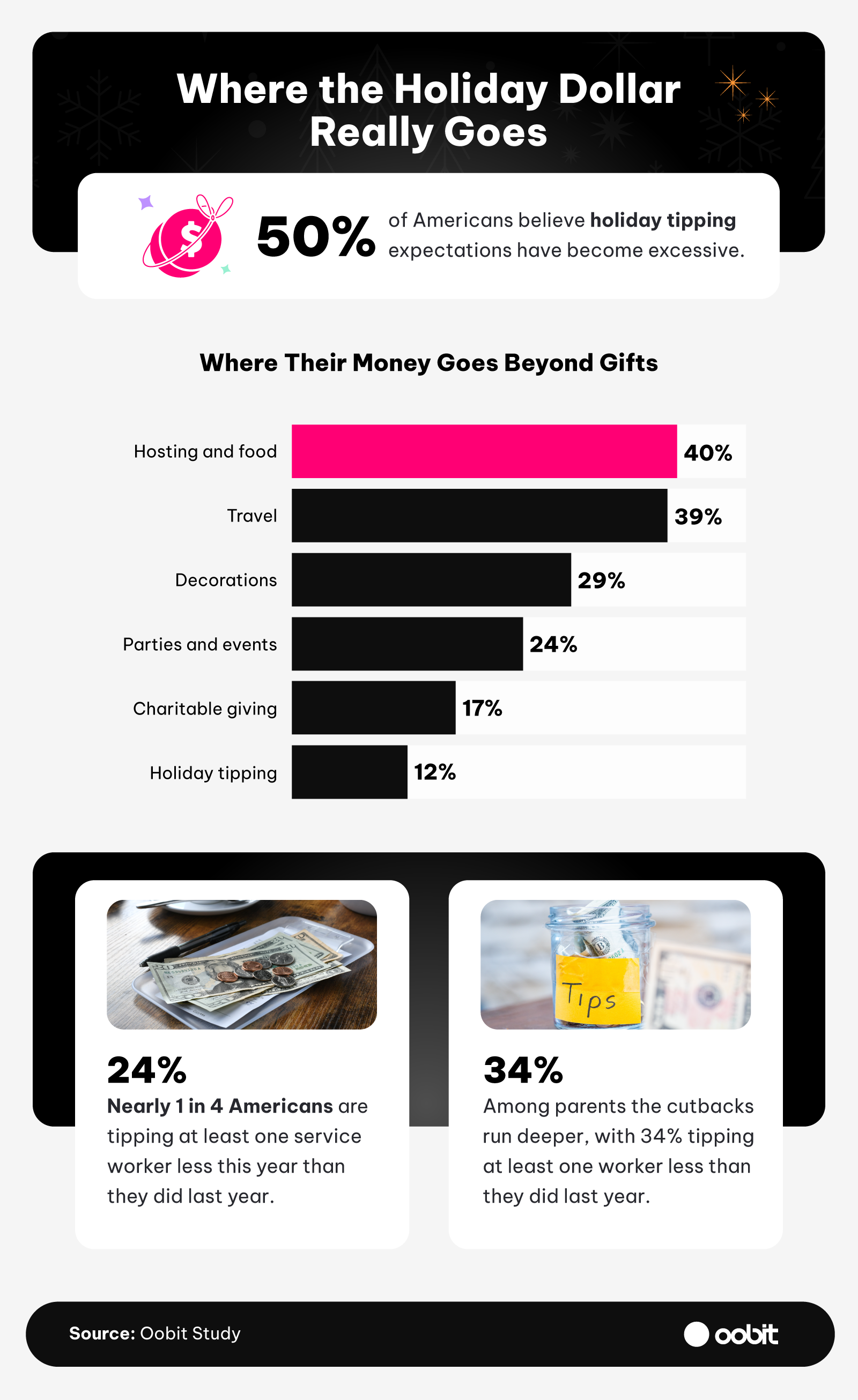
In addition to gifts, Americans set money aside for hosting and food, travel, decorations, and holiday tipping. But tipping has become a flashpoint. Half of Americans (50%) said holiday tipping expectations have become excessive. Gen X was the most likely to say so (57%), followed by baby boomers (52%) and millennials (51%). Fewer Gen Zers felt this way (38%).
That frustration is showing up in wallets. Nearly 1 in 4 Americans (24%) said they are tipping at least one service worker less than the year before, rising to 34% among parents. Delivery drivers were the first to see their tips cut (7%), while childcare providers were among the least affected (2%).
But gifts remain the biggest source of financial stress. Nearly 2 in 3 Americans (63%) said gifts caused them the most stress, nearly three times as many as named travel (23%). Travel weighed most heavily on the young (30% of Gen Z) and on men (28%), while baby boomers stood out for budgeting around charitable giving (33% vs. 16%-18% among younger generations).
With holiday spending stretching across more of the year, getting something back from those purchases matters more to many shoppers. And while crypto rewards are still relatively new, plenty of Americans are open to earning them.
Shoppers are looking for more flexibility in how they manage holiday spending. Nearly half of Americans (46%) said they are using or considering using buy now, pay later this holiday season, including 16% who were already using it. Millennials were the most likely to use buy now, pay later (19%).
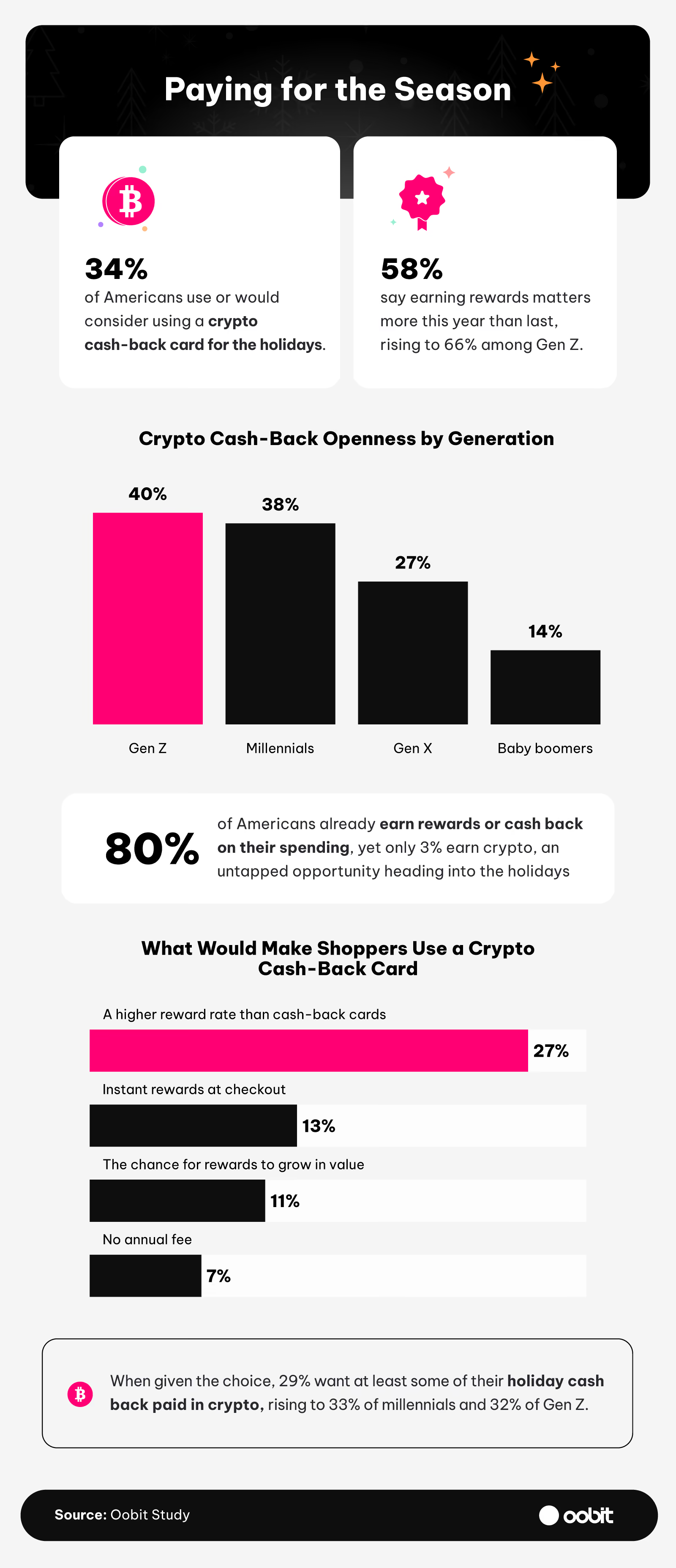
But how shoppers pay is only part of the equation. More than half of Americans (58%) said earning rewards or cash back matters more this year than last, and 66% of Gen Z said the same.
Most Americans (80%) already earn some form of rewards or cash back, but crypto represents a largely untapped part of that market. Just 3% currently earn crypto rewards, but crypto usage and interest in it were much higher.
More than half of Americans (55%) either own cryptocurrency (37%) or are interested in owning it (18%). About a third (34%) said they use or would consider using a crypto cash-back card for holiday purchases. This was even higher among Gen Z (40%) and millennials (38%). And nearly 3 in 10 Americans (29%) said they would like at least some of their holiday cash back paid in crypto.
The holiday season stretches across months, and the shoppers who feel most in control tend to be the ones who start early and plan for more than gifts. Spreading purchases across paychecks and budgeting for travel, tipping, and presents can take pressure off the final weeks. It's also worth thinking about how you pay and how you can earn something back. However you celebrate, the earlier you map out the season, the more room you give yourself to enjoy it.
Oobit surveyed 1,007 Americans about when they begin their holiday shopping, what they budget for, how they plan to pay for the season, and their openness to earning crypto cash back on holiday purchases. The survey was conducted via CloudResearch Connect in July 2026. Respondents were 51% men, 48% women, 1% non-binary or prefer not to say; 49% millennials, 24% Gen X, 20% Gen Z, and 7% baby boomers.
Oobit is a crypto payments platform that lets users tap and pay with digital assets directly from their phone, no physical card required. Oobit converts crypto to local currency at the point of sale, so users can spend Bitcoin, USDT, Ethereum, and other digital assets anywhere Visa is accepted. Users can also earn up to 10% crypto cashback, paid instantly in stablecoins on eligible purchases.
The information in this article may be used for noncommercial purposes only. If shared, proper attribution with a link to Oobit must be included.





%202.svg)