Download oobit app to pay with crypto everywhere.
Scan the QR code to download the app





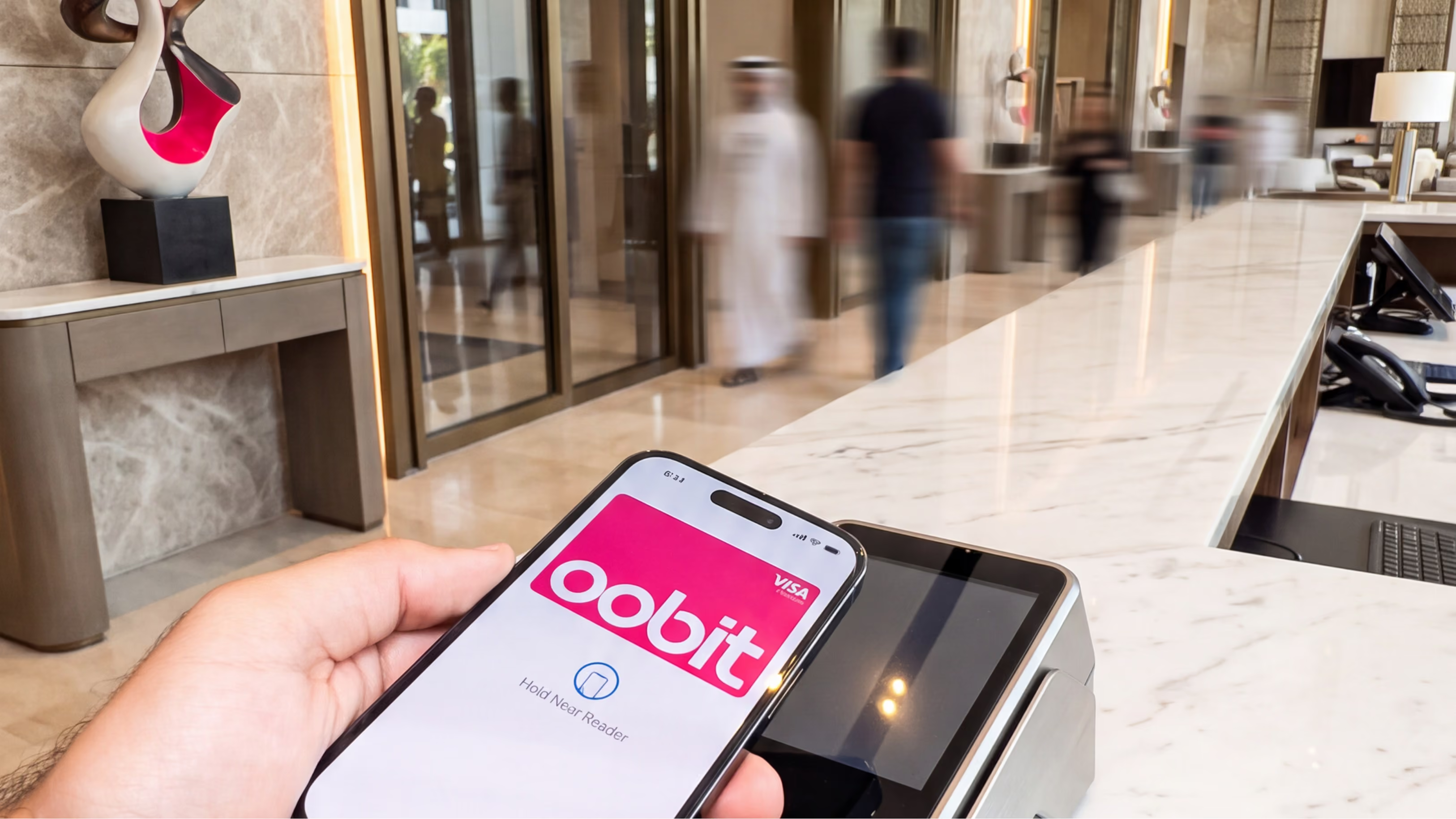
Paying with a tap of a phone or card has moved from novelty to habit. Most shoppers no longer think twice when a terminal lights up at the register. But "most" is not "all," and the gaps decide whether you can leave your wallet at home.
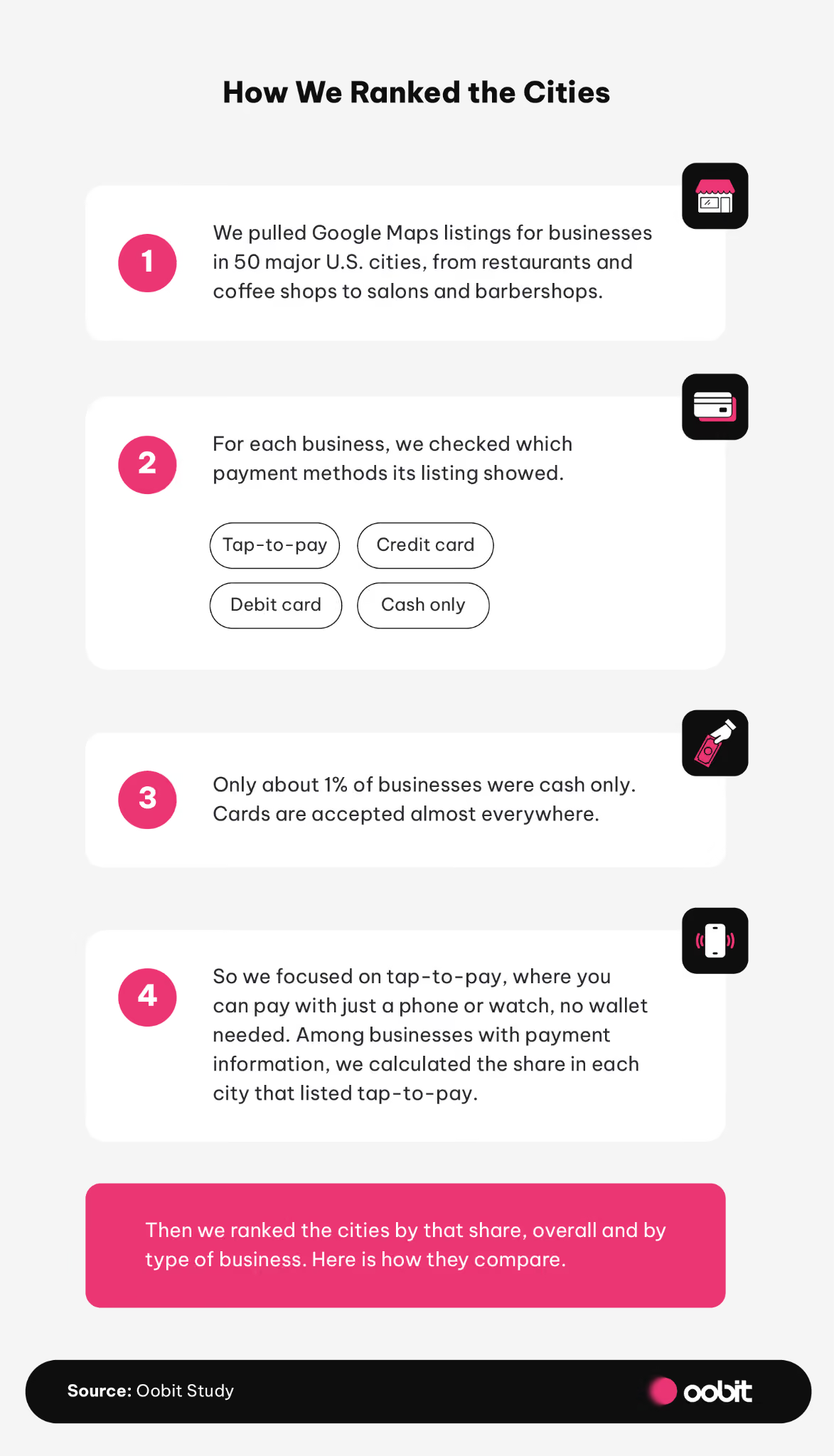
To see how prepared American cities are for an increasingly cashless economy, we analyzed over 28,000 businesses across 50 major U.S. cities. We measured how many list tap-to-pay (NFC) as an accepted payment type. The result is a snapshot of where digital payments have become the true default, and where a backup card still earns its place in your pocket.
Tap-to-pay is now the norm in every major city we studied. Acceptance runs from 74.9% to 86.0%, so the question is no longer whether you can tap, but how often you'll need a backup.
Washington, DC, leads, with 86.0% of its businesses listing tap-to-pay. Austin (85.8%) and Charlotte (85.2%) sit just behind. At the bottom, El Paso is at 74.9%, followed by Tulsa (75.6%) and Oklahoma City (76.0%).
Across all 50 cities, 80.5% of businesses list tap-to-pay. Only about 1% were listed as cash-only. So the shortfall is not a cash-only problem. In most cases, the business simply does not list tap-to-pay as an option.
Even in the cities with the lowest acceptance, about 3 in 4 businesses list tap-to-pay. Digital payments are the default across many metros, and a phone or card payment works in much the same way from one city to the next.
Some business categories are more likely than others to accept contactless payment.
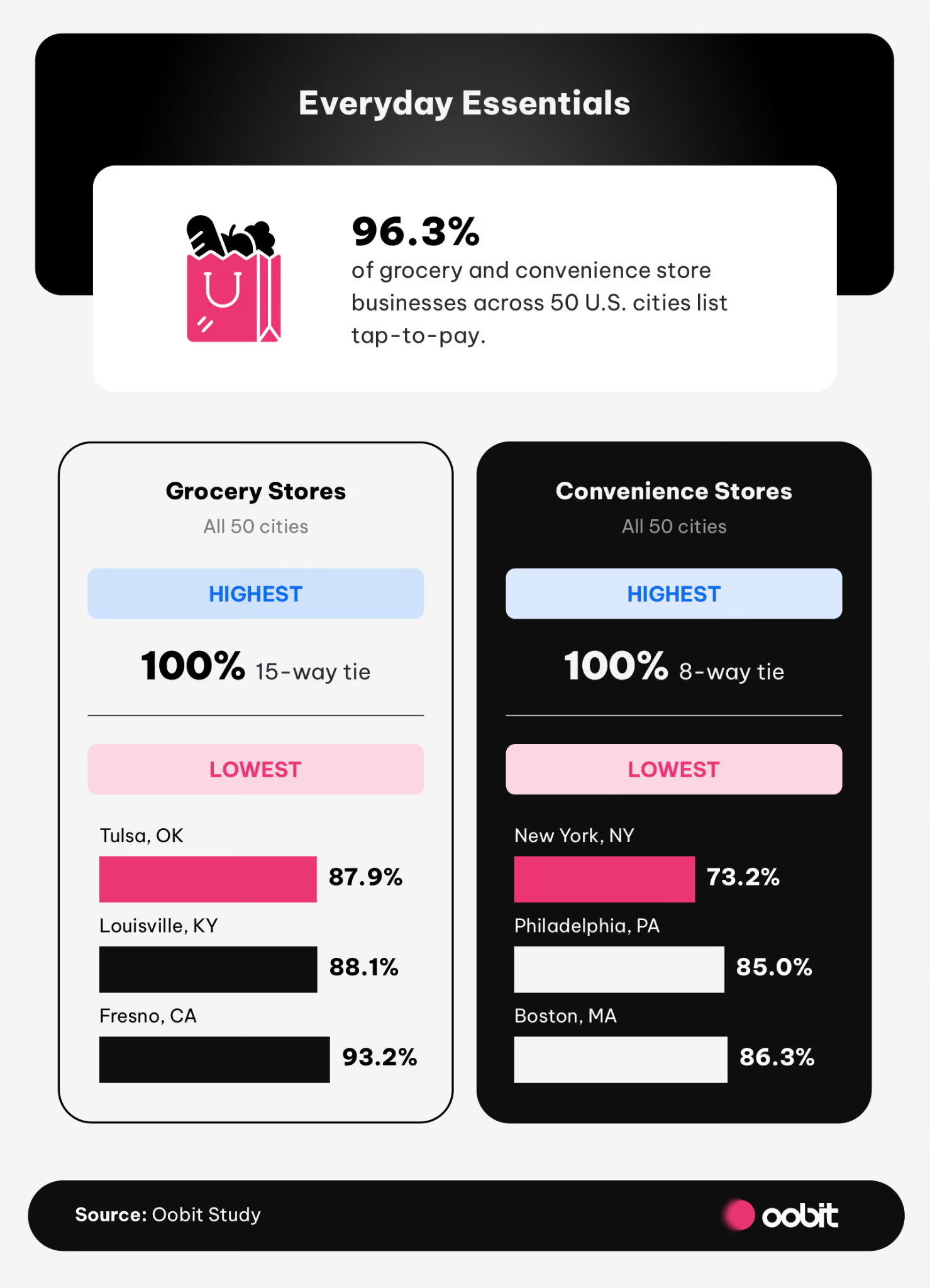
Nearly every grocery store with payment information (97.4%) accepted tap-to-pay. Coffee shops are nearly as dependable. Coffee shops hit 100% in nine cities: Washington, Austin, Seattle, Phoenix, New York, Miami, Philadelphia, Las Vegas, and Tucson. Cafes hit 100% in Washington, Austin, San Diego, and Portland.
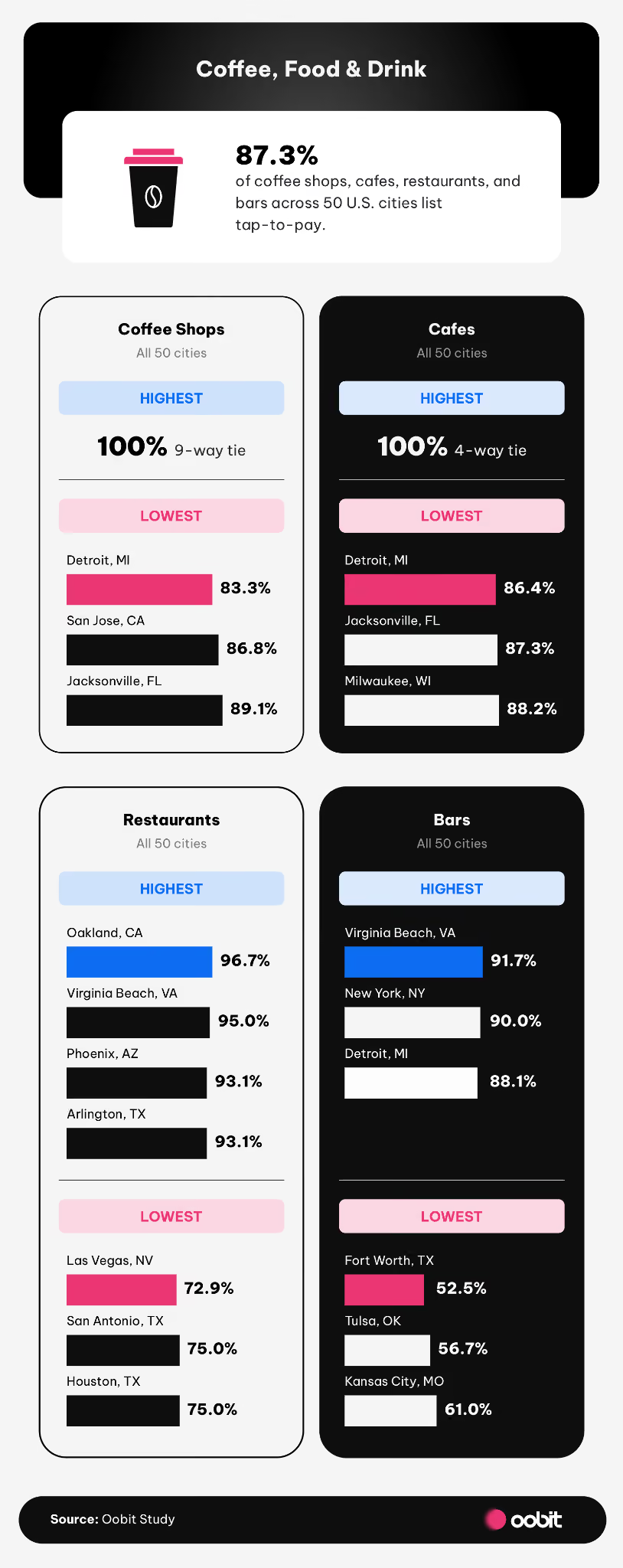
Dining and nightlife vary more by city. Whether a venue lists tap-to-pay depends heavily on the city and the type of place.
Fort Worth is at the bottom for both bars and live music, so a night out there is the clearest case for carrying a backup.
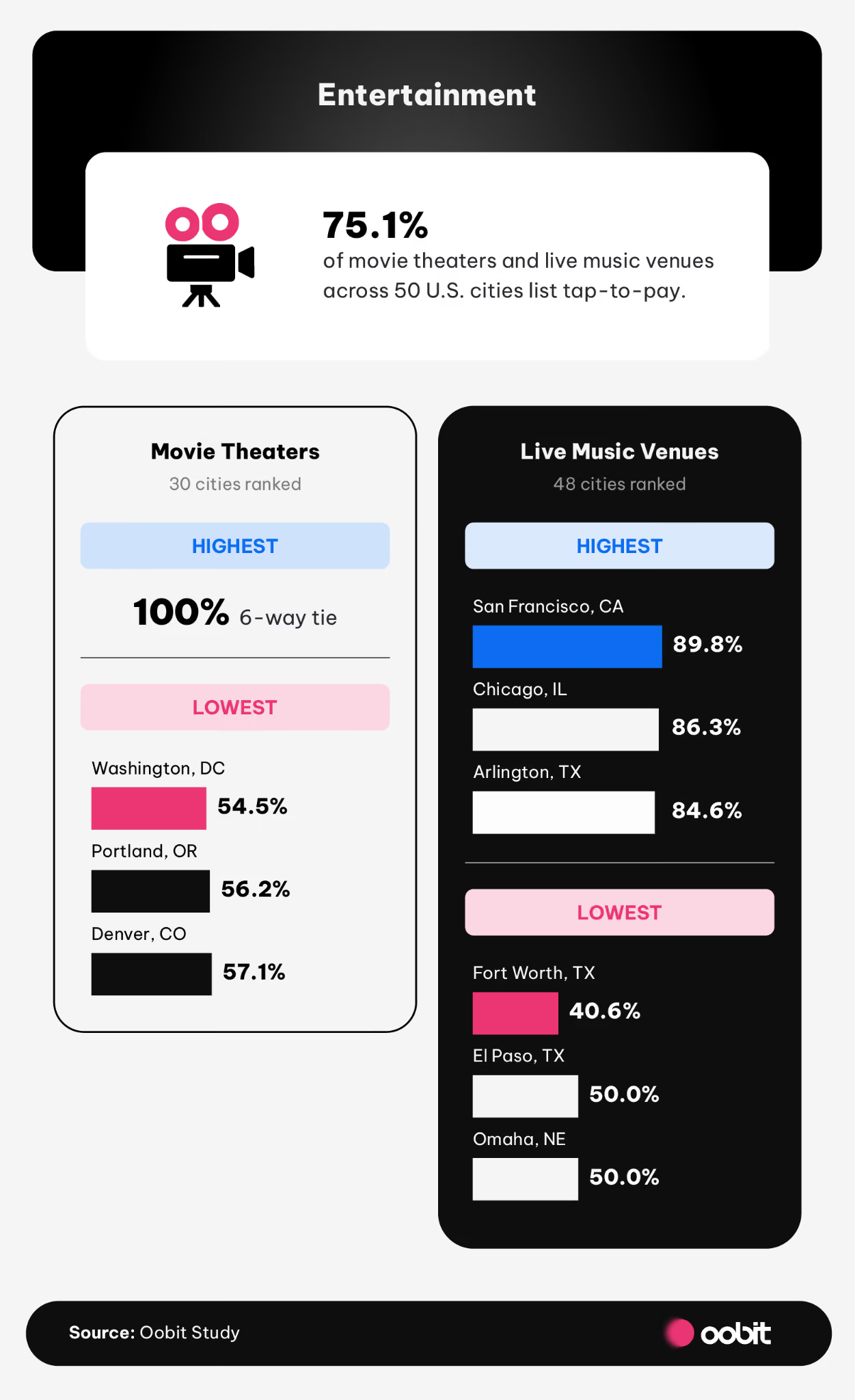
Across all 50 cities, 81.4% of movie theaters with payment info list tap-to-pay, and six cities reach 100%. The surprise is Washington, DC. It has the highest tap-to-pay acceptance overall, yet it has the lowest share for movie theaters (54.5%).
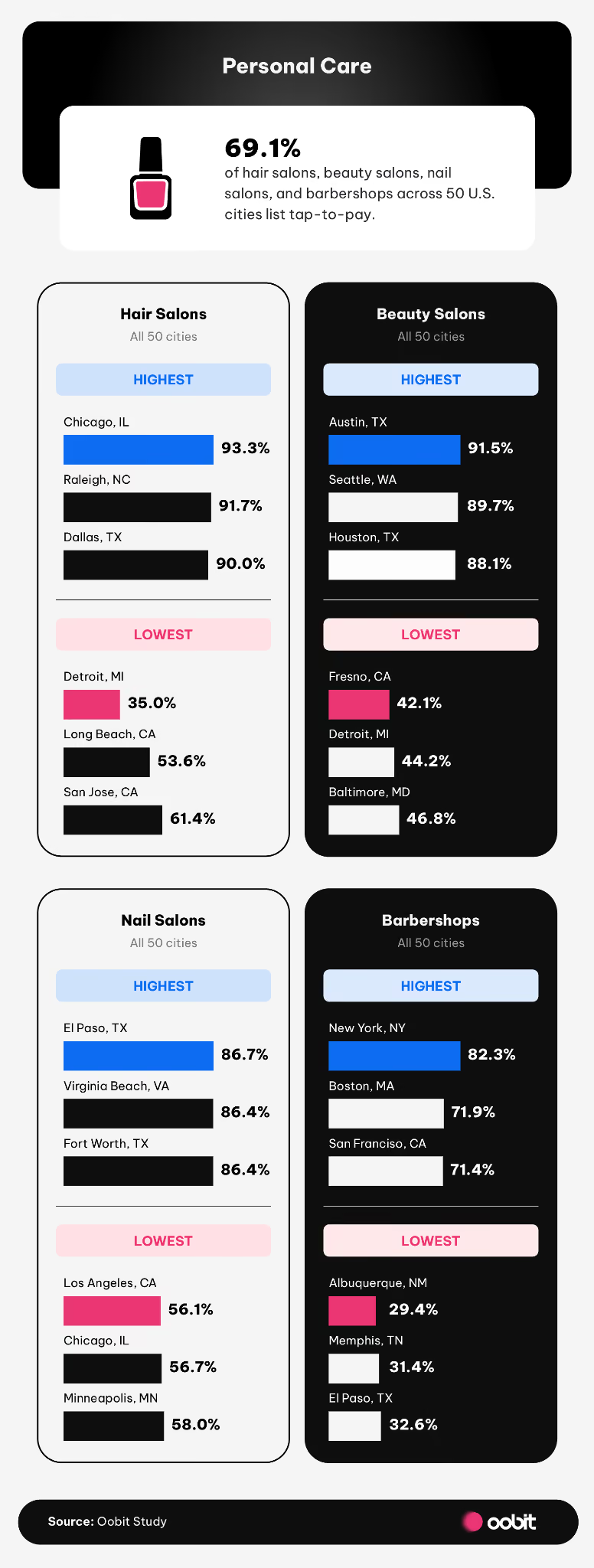
Personal care is the least tap-ready category overall, at 69.1%. Salons and barbershops are often small, independent businesses, which may explain the lower share.
The most reliable categories are everyday stops. Groceries and coffee are repeat, everyday purchases, and they are where a cashless routine takes hold. The weaker categories are occasional, so a miss costs less. Where a business doesn't list a tap option, a backup is still the practical choice.
Tap-to-pay is the foundation of any "leave the wallet at home" routine. It works for anyone paying from a phone or card, including people who hold crypto. Many crypto cards and wallet-linked apps use the same tap-to-pay terminals. The balance is converted to regular currency at checkout, so the business is paid as usual. That only works where a business lists a tap option, which is why these numbers matter.
The takeaway is not that any city is unready for a walletless day. Even the cities with the lowest acceptance have about 3 in 4 businesses listing tap-to-pay. Planning your day by category may be more useful than planning by city. If you travel between cities, expect the least friction in Washington, Austin, and Charlotte, and a little more in El Paso, Tulsa, and Oklahoma City.
This study ranks 50 major U.S. cities by how widely local businesses list tap-to-pay (NFC) as an accepted payment. We collected roughly 35,000 Google Places listings across 13 business categories: restaurants, bars, cafes, coffee shops, barbershops, beauty salons, hair salons, nail salons, convenience stores, grocery stores, live music venues, movie theaters, and museums. We removed non-U.S. listings, listings in the wrong state, and listings whose address was outside the city searched, and counted each place once per city, even if it appeared under more than one category. That left about 28,750 unique businesses. About 92% of them had payment information listed on Google.
For each city, we calculated the share of those businesses that list NFC as an accepted payment type. Businesses with no payment information were excluded from the calculation, not counted as non-accepting. Cities are ranked by their overall NFC share. We also calculated the share for each category, counting each business in every category it appeared in. We left out category results with fewer than 10 listings with payment data in a city. Because the data reflects what businesses report to Google, not how customers actually pay, the percentages are best read as minimum levels of tap-to-pay availability. The data reflects listings at the time of collection and may change.
Oobit is a crypto payments platform that lets people spend digital assets in everyday life. Through the Oobit app and crypto card, users can pay in stores with Apple Pay and Google Wallet, pay online, and send money internationally. Oobit says users can spend at over 175 million merchants worldwide. Explore how to pay with Bitcoin or pay with USDT with Oobit.
The information in this article may be used for noncommercial purposes only. If shared, proper attribution with a link to Oobit must be included.





%202.svg)